
A New Year’s Reminder: Your Students Are More Than Their Test Scores
As educators, you live in a world of dashboards and data points: benchmarks, percentiles, sub-groups, growth bands, proficiency labels. These numbers are essential. But your students are more than their test scores. At this time of year, it’s worth saying that out loud.
Tests don’t measure how a student treats the classmate who sits alone. They don’t capture the courage it takes to speak up about anxiety, to ask for help, to try again after failing publicly. They don’t show the quiet leadership of the student who keeps a group together when a project gets messy.
So as we ring in the New Year, let’s widen the lens and celebrate what students, and you the educators who guide them, are doing exceptionally well.
Students Are Practicing Empathy, Inclusion, and Emotional Honesty
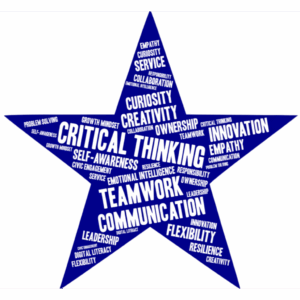
One reason many educators feel hopeful on even the hardest of days is that today’s students are often more open-minded, more respectful of differences, and more willing to talk about emotions. We are so focused on academic weaknesses that we may forget to celebrate their strengths:
A widely shared article summarizing teacher perspectives highlights that kids today are better at embracing individuality, discussing mental health openly, holding themselves accountable, and respecting others’ interests and identities. While anecdotal, these reflections align closely with what many teachers report seeing daily in classrooms.
Article: Kids Today Do These Things Better Than Previous Generations
https://www.yourtango.com/self/kids-today-do-these-things-better-previous-generations
Empathy, emotional intelligence, and self-awareness are not “soft” skills. They are foundational life skills. Students who feel safe, understood, and respected are more likely to engage academically, persist through difficulty, and build healthy relationships well beyond school.
Students Are Feeling More Prepared for the Future
Despite common narratives about disengagement, recent national data suggests a more encouraging reality.
According to Gallup’s 2025 Voices of Gen Z research, nearly six in ten middle and high school students report feeling prepared for the future, an increase over previous years. Students also reported higher levels of engagement with their school experience.
Gallup report: Gen Z Students Are More Engaged in School and Ready for the Future
https://news.gallup.com/poll/694238/gen-students-engaged-school-ready-future.aspx
Feeling “prepared” goes beyond academic readiness. It reflects confidence, agency, and optimism—signals that students believe their effort today can lead to opportunity tomorrow. In a post-pandemic context, that mindset is not accidental. It is cultivated by educators who help students see relevance, purpose, and possibility in their learning.
Students Are Giving Their Schools Higher Grades
Another encouraging signal comes directly from students themselves.
In 2025, 71% of students graded their school an A or B, marking an improvement over previous years in Gallup’s long-running polling. These ratings reflect more than academics—they capture students’ sense of belonging, safety, and support.
Gallup report: Schools Receive Better Grades From Students in 2025
https://news.gallup.com/poll/691838/schools-receive-better-grades-students-2025.aspx
This matters because students experience school as a whole environment. When they rate schools positively, it suggests that educators are successfully building communities—not just delivering content.
Students Are Solving Real Problems Through Applied Learning
Standardized tests measure recall and procedural knowledge. They struggle to measure creativity, collaboration, and application.
Across the country, students are engaging in hands-on learning through robotics, engineering challenges, and project-based experiences. Programs such as FIRST LEGO League allow students to design, test, and iterate solutions to real-world problems, fostering teamwork and critical thinking.
Example coverage:
https://www.fox21news.com/news/local/elementary-students-showcase-skills-in-robotics-competition/
Similarly, organizations like Project Lead The Way recognize students who apply STEM learning to create tangible community impact—demonstrating how academic knowledge transfers into meaningful action.
Project Lead The Way – Community Impact Awards
https://www.pltw.org/about/awards-and-recognition
For many students, these environments reveal their strengths that traditional testing will never capture.
Students Are Contributing Through Service and Civic Engagement
Young people are also finding ways to contribute beyond the classroom.
States and districts are increasingly recognizing student service as a meaningful educational outcome. Connecticut, for example, recently launched a statewide award honoring high school students who complete sustained community service projects.
Connecticut student service award coverage:
https://ctmirror.org/2024/05/31/connecticut-student-volunteer-award/
Nationally, civic participation is receiving renewed attention, with organizations advocating for expanded service opportunities as a way to build skills, connection, and purpose.
AmeriCorps announcement on expanding service:
https://www.whitehouse.gov/briefing-room/statements-releases/2024/04/22/fact-sheet-president-biden-announces-actions-to-expand-national-service/
Service has value to the individual as well as our communities at-large. Independent Sector estimates the value of a volunteer hour at $34.79 in 2024, underscoring what the contribution of their time is worth
Independent Sector volunteer value report:
https://independentsector.org/resource/value-of-volunteer-time/
Educators Are Driving Innovation That Changes Student Experiences
None of this happens by accident.
Educators across the country are being recognized for innovative practices that emphasize relevance, agency, and deeper learning. Awards for project-based learning, instructional innovation, and classroom leadership continue to highlight educators who are expanding how success is defined.
Example recognition:
https://www.edweek.org/teaching-learning/project-based-learning-gets-national-recognition/2024/03
These efforts reflect a broader shift: educators are not abandoning rigor—they are redefining it to include communication, problem-solving, creativity, and resilience.
A New Year Commitment: Measure What Matters
As the New Year begins, yes— keep on collecting the performance data. Use it responsibly. Advocate for students who need support.
But also remember to notice what doesn’t fit neatly into a score report:
- The student who now raises their hand after months of silence
- The group that learns to collaborate instead of compete
- The learner who finds their place through robotics, art, or service
- The classroom that feels safer, kinder, and more connected than it did last year
These are not distractions from learning. They are the softer indicators of it.
Your work is bigger than a number.
Your students are more than a score.
And this year will be brighter than the headlines suggest. ❤️