

The "Human-Centered" AI Shift in 2026:
Why Schools are Prioritizing Authentic Learning
The New Reality of the 2026 Classroom: Beyond the Hype
It is officially 2026, and the “will they or won’t they” debate regarding Artificial Intelligence in schools is settled. AI has transitioned from a shiny digital add-on to a foundational piece of district infrastructure. Globally, roughly 65–75% of students utilize AI tools for their schoolwork, while approximately 60% of teachers have woven the technology into their daily professional routines.
However, as we have leaned into the tech, a significant “human connection gap” has emerged. Roughly 50% of students report feeling less connected to their teachers due to increased AI use. This has sparked the most important trend of the decade: the rise of Human-Centered AI (HCAI). HCAI treats AI as a “quiet engine” for administration while keeping the essential human bond at the center of the learning experience.
Legislative Guardrails: Florida’s S 1194 and the National Trend
By 2026, outright bans on AI have been replaced by robust AI Literacy programs. But literacy is no longer just a suggestion—it is becoming a legal mandate.
Florida’s Senate Bill 1194 (S 1194)
Florida’s Senate Bill 1194 (S 1194) aligns with the national move toward proctored, verified learning environments. Under these standards, student use of AI is becoming strictly regulated:
- Teacher Permission: AI use is restricted unless expressly permitted for a specific task.
- Mandatory Disclosure: Policies now favor students disclosing exactly how AI was used in their work.
- Proctored Assessments: The bill emphasizes safeguards to ensure authenticity, mirroring requirements in states like Ohio, where districts must have formal AI policies by July 1, 2026.
The Teacher’s Secret Weapon: Productivity Gains via Classwork.com
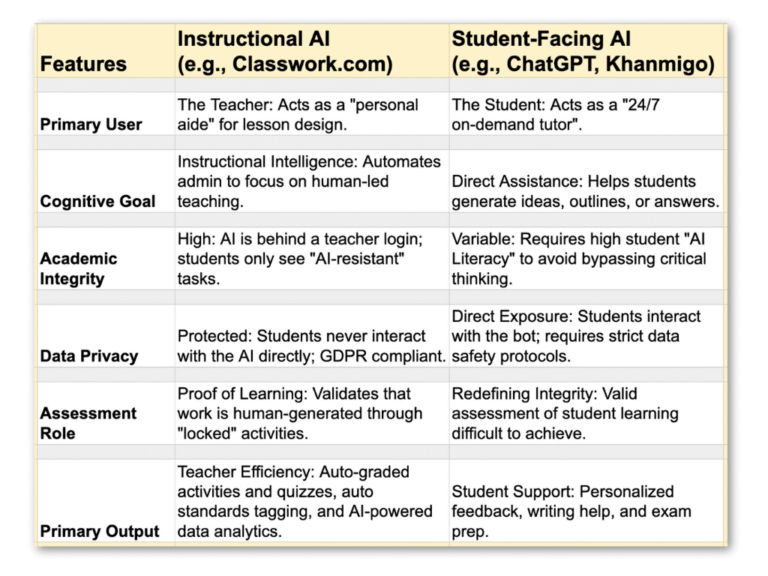
As districts scramble to meet these standards, the focus has shifted to “Instructional AI.” Classwork.com (formerly TeacherMade) is the gold standard for this “Teacher-First” strategy. By keeping AI exclusively in the hands of educators, the platform offers massive productivity gains:
1. Instant Content Generation and Digitization
- Digitize Resources: Instantly turn static PDFs or Word docs into interactive, auto-graded activities.
- Generate Items: Create standards-aligned quizzes and Technology-Enhanced Items (TEIs) like drag-and-drops in seconds.
2. The Power of Automatic Tagging
Classwork.com automates the administrative “mapping” of curriculum by automatically tagging every question with:
- State Standards: Ensuring alignment with specific learning objectives.
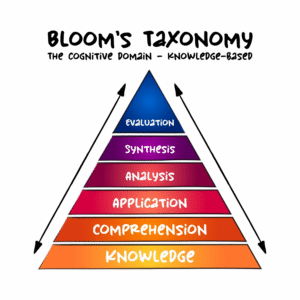
- Bloom’s Taxonomy: Identifying the level of cognitive challenge.
- Webb’s Depth of Knowledge (DOK): Categorizing the complexity of the task.
3. Rich Reporting and Analytics
These tags allow for “AI Analytics” that provide deep insight into district-wide performance and help address patterns like chronic absenteeism.
4. Auto-Grading: Reclaiming the Weekend
The auto-grading system provides instant feedback to students while freeing teachers from the burden of manual grading, allowing them to focus on individualized student attention.
The AI Already Knows How to Think— Do Our Students?
While AI can be a powerful learning partner, we must be careful that it does not become a shortcut that allows students to bypass critical thinking. One of the greatest fears in 2026 is “cognitive atrophy”—the risk of students losing the ability to think critically or solve problems because they have offloaded the “heavy lifting” to a machine.
Where AI Fits (and Where It Doesn’t)
AI can effectively assist teachers, but students must still “earn their degrees” through authentic practice. Educators prioritize a “True Pulse” on growth to ensure daily work predicts performance on state tests, which still prohibit AI.
Ensuring Progress Through “AI-Resistant” Design
Classwork.com acts as a “digital proctor” by prioritizing the learning process over the final product:
- Unique Content: Digitized materials are unique to the teacher’s lesson and aren’t “googleable”.
- Verified Originality: Because students lack AI access within the platform, their submissions are a direct reflection of their own knowledge.
- Real-Time Monitoring: Teachers see every click and struggle as it happens, catching if a student is mastering a standard or just coasting.
Future-Proofing the Diploma: Protecting the Human Soul of Learning
In an era where a machine can generate a five-paragraph essay in seconds, the value of a diploma can no longer rest on the “final product.” It must rest on the learning process—the uniquely human struggle to understand, synthesize, and create.
The Consequences of Abdicating Thought
If we allow students to abdicate critical thinking to machines, we risk creating a generation of “factories for answers” rather than centers of individual genius. A world where humans stop thinking is a world where we lose our ability to lead, empathize, and innovate. We don’t just teach kids to solve for x because they need to know x; we teach them so they learn how to navigate struggle.
The Irreplaceable Teacher-Student Bond
A bot cannot see the “lightbulb moment” in a student’s eyes, nor can it provide the mentorship that steers a child through a personal crisis. By using platforms like Classwork.com to automate the “paperwork” of teaching, we aren’t replacing the teacher—we are liberating them. We are clearing the administrative clutter so teachers can return to their true calling: the human-led guidance that future-proofs a student’s character and intellect.
Ultimately, a 2026 diploma must be more than a piece of paper; it must be a verified certificate of authentic human effort.
External Links & Referenced Research
What is “Human-Centered AI” (HCAI) in the context of a 2026 classroom? By 2026, HCAI has become the standard for school districts. It treats AI as a “quiet engine” that handles administrative tasks—like grading and content generation—while ensuring that the student-teacher relationship remains the primary focus. The goal is to use AI to clear away “administrative clutter” so teachers have more time for mentorship and face-to-face instruction.
How do new laws like Florida’s S 1194 regulate student use of AI? Florida’s Senate Bill 1194 (effective July 1, 2026) mandates that students may only use AI tools when a teacher has expressly permitted it for a specific task. Additionally, students are required to disclose exactly how AI was used in their work. This is part of a national trend toward proctored, verified assessments to combat “cognitive atrophy” and ensure academic integrity.
What is “cognitive atrophy,” and why is it a major concern for educators? Cognitive atrophy is the fear that students will lose the ability to think critically, solve problems, or synthesize information if they offload all “heavy lifting” to AI. To prevent this, schools are shifting toward “AI-resistant” assignments that prioritize the learning process (the struggle to understand) over just the final product (the essay or answer).
How does Classwork.com support the 2026 mandate for “Teacher-First” AI? Classwork.com (formerly TeacherMade) keeps AI exclusively in the hands of the educator. Teachers use the AI Content Assistant to instantly digitize resources, generate standards-aligned items, and automate the tagging of Bloom’s Taxonomy and Webb’s Depth of Knowledge (DOK). Crucially, students do not have access to AI within the platform, ensuring their submissions are a verified reflection of their own knowledge.
Why is “Automatic Tagging” considered a secret weapon for district leaders? Manual curriculum mapping is notoriously slow. Classwork.com automates this by tagging every question with State Standards and cognitive complexity levels. This creates “AI Analytics” that give district leaders a real-time view of performance, helping them spot mastery gaps or even predict patterns like chronic absenteeism before they become critical issues.
Can a diploma remain valuable in a world where AI can do the work? Only if the diploma represents verified, authentic human effort. Future-proofing a diploma in 2026 means moving toward proctored assessments and unique, non-“googleable” content. The value lies in the human connection and the verified struggle of the student, which is why platforms that act as “digital proctors” are now essential for maintaining the integrity of educational credentials.