
HB 8 and the Shift to Instructional Intelligence
The End of the Benchmark Era
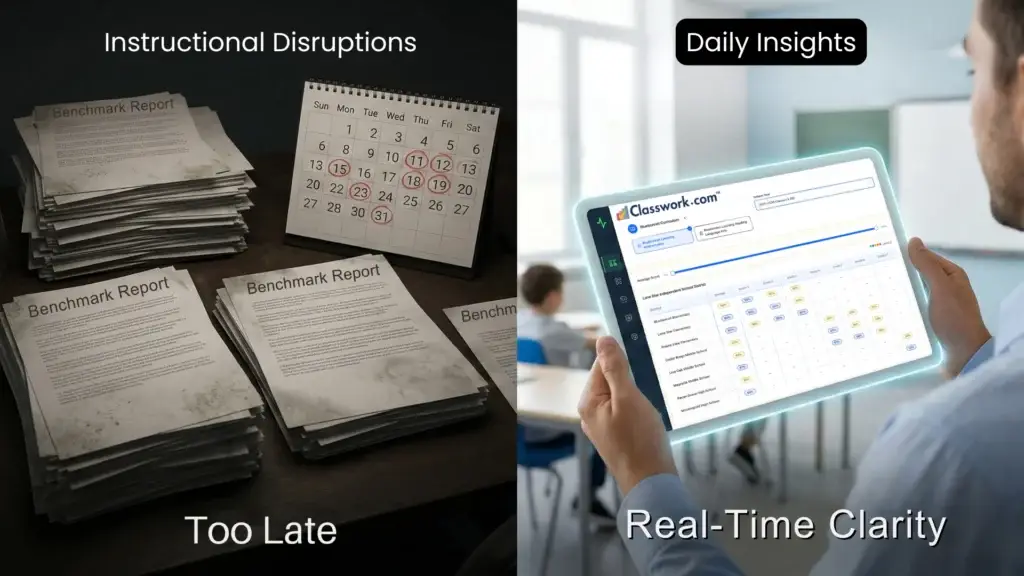
For twenty years, Texas school districts relied on a familiar rhythm: teach, benchmark, predict, and remediate. However, with the full implementation of House Bill 8 (HB 8) and the impending arrival of the Student Success Tool (SST), that cycle is officially broken. Many districts are treating this shift as a simple change in state testing, but it is so much more. To navigate this transition successfully, leaders must shift their focus away from periodic testing and toward building their district’s Instructional Intelligence.
The HB 8 Problem: More Than a New Test
HB 8 does not just reduce testing volume; it fundamentally restricts how districts gather evidence. Historically, benchmark tests answered critical leadership questions: Are students on pace? Is rigor consistent across campuses? Where should central office intervene?.
As these internal mechanisms disappear, the accountability pressure remains. Students must still meet grade-level standards, and districts will still be judged on outcomes. The “smart districts” will use 2026 as a transition year to build a measurement system based on growth data rather than periodic predictions.
Avoiding the "Compliance Trap"
A common, yet dangerous, reaction to the benchmark ban is “rebranding”. Some districts believe that by simply shortening a 9-week benchmark into weekly or monthly “mini-tests,” they remain compliant.
This is a compliance trap. If a local test still covers broad prior content, exists primarily to predict EOY performance, or interrupts instruction for data collection, it is still a benchmark—just with a different name.
Instructionally Supportive Measurement must be:
Tied tightly to what was just taught.
Used immediately to inform reteaching and pacing.
Integrated so the teacher acts while the instructional window is still open.
The SST Era: A New Standard of Rigor
The transition to the SST (fully taking over in 2026-2027) represents a shift in demand, not just format. While the test may be shorter, it concentrates rigor into “linked tasks” that require sustained reasoning.
Expect to see item structures such as:
Part A / Part B sequences.
Multi-part reasoning problems.
Required rationales for correct answers.
Because you cannot “game” the SST with last-minute test prep or “educational triage” for bubble kids, districts must build student capacity organically throughout the year.
Daily Instruction as the New Measurement Engine
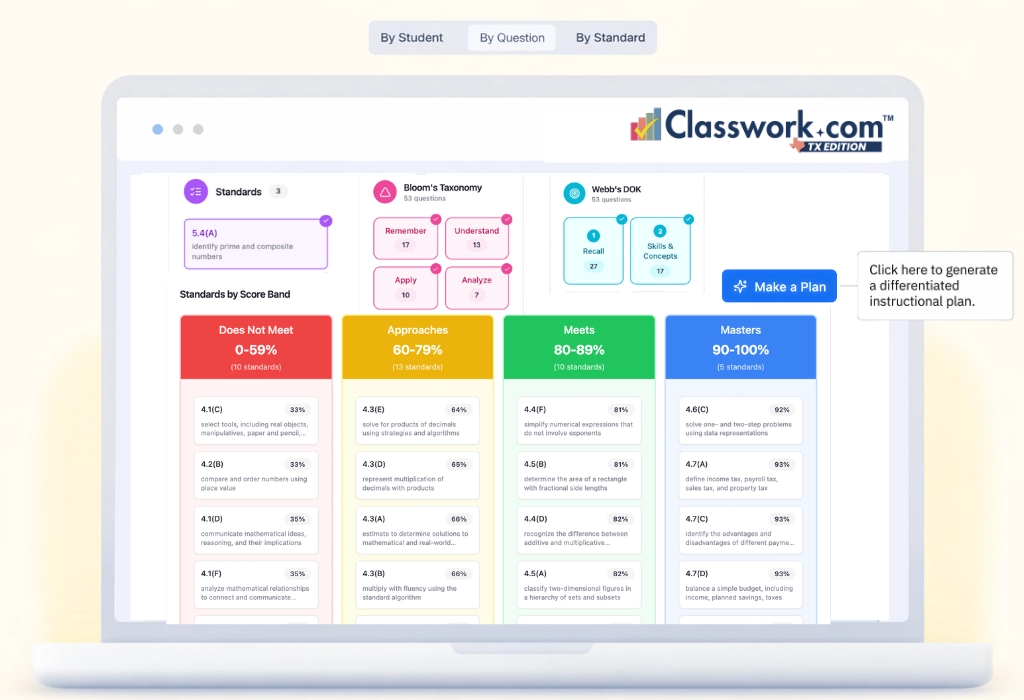
If benchmarks are gone, the data must come from instruction itself. This “continuous data model” captures evidence through natural classroom intervals: daily exit tickets, weekly TEKS checks, or bi-weekly tests.
To make this work at scale, four conditions must be met:
Tasks must tie directly to taught TEKS.
Rigor must be intentional and consistent.
Data must be captured without extra time (auto-scored).
Results must be visible to the district instantly.
Repurposing the Assessment Department
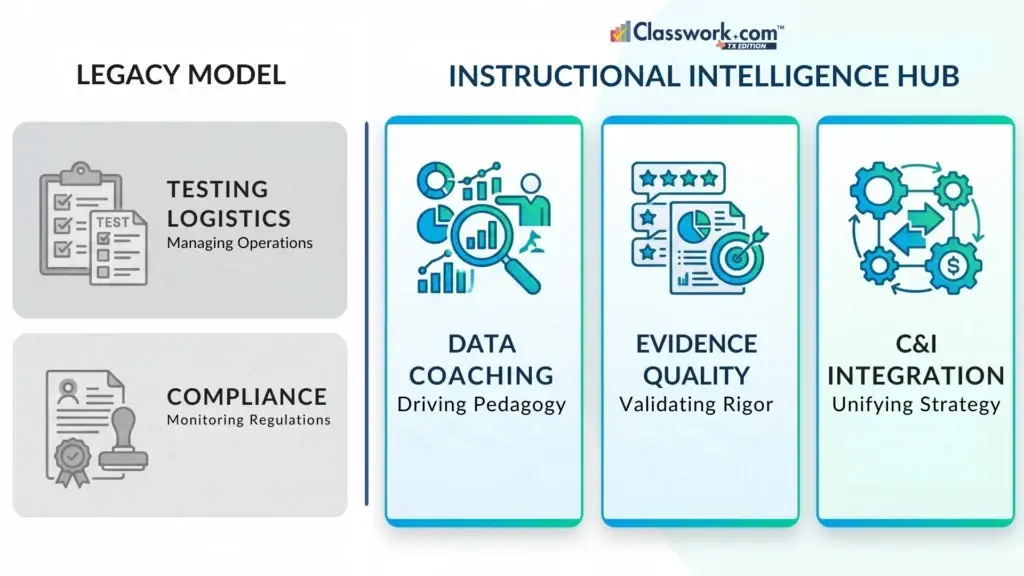
The shift requires a total realignment of district staff. The traditional Assessment Department must pivot from “Test Compliance” to becoming an Instructional Intelligence Hub.
Pivot to Data Coaching: Help campuses interpret real-time classroom evidence alongside state BOY/MOY data.
Embed Within Curriculum: Move specialists into C&I teams to ensure progress monitoring is seamless.
Rebrand for Culture: Change names to “Learning Support” to signal a focus on growth, not “post-mortems”.
Before the SST fully arrives, leadership should execute these foundational steps:
Identify current sources of mid-year data.
Determine which practices are no longer viable under HB 8.
Standardize how continuous instructional evidence is captured.
Establish a measurement layer that works across all adopted materials.
Pilot the new system and train staff for full deployment.
Funding the Shift: LASO and LIFT Grants
Districts often believe LASO and LIFT grants are strictly for buying HQIM materials. In reality, these funds are intended to support the measurement infrastructure and data tools required to validate that the curriculum is working. Platforms like Classwork.com provide the exact TEKS mastery data required to meet LIFT grant objectives.
Clarity Over Legacy
Legacy systems like Eduphoria or DMAC are useful for storing state results, but they weren’t built to be “active engines” for daily evidence. The districts that thrive in the SST era will be those that prioritize instructional intelligence—transforming daily classwork into a reliable evidence stream that produces clarity, coherence, and trust.
Q: Does HB 8 completely ban district-wide testing?
A: No. HB 8 removes the “old way” of generating data (traditional benchmarks) but does not remove the need for evidence. It requires districts to move toward instructionally supportive measurement.
Q: What is the main difference between STAAR 2.0 and the SST?
A: The SST is a shorter test with concentrated rigor. It relies on multi-part reasoning and linked tasks that require students to justify their answers.
Q: Can we still use “mini-benchmarks” under HB 8?
A: Only if they change in purpose. Simply increasing the frequency of a test doesn’t make it legal; the test must be tied to recently taught TEKS and used to inform immediate instruction, not just predict EOY scores.
Q: How can districts fund the transition to a new data model?
A: Texas districts can utilize LASO and LIFT grants. These are designed to fund the measurement infrastructure and data tools needed to validate HQIM implementation.
Build Your Instructional Intelligence Hub
Don’t leave your district’s compliance to chance. Transitioning from legacy benchmarks to a continuous instructional intelligence model is the most significant shift Texas districts have faced in a generation. Smart districts are acting now to build the measurement infrastructure they need before the SST fully arrives. At Classwork.com, we specialize in transforming your daily classroom evidence into the reliable, rigorous data leadership requires to thrive under HB 8.
Resources
Official Guidance: Overview of House Bill 8 (TEA TAA Letter)
Legislation: HB 8 Full Bill Text
Funding: LASO and LIFT Grant Opportunities
Implementation: Request a Classwork.com Readiness Audit