
Study Reveals That School Cellphone Bans Reclaim Attention. Now What?
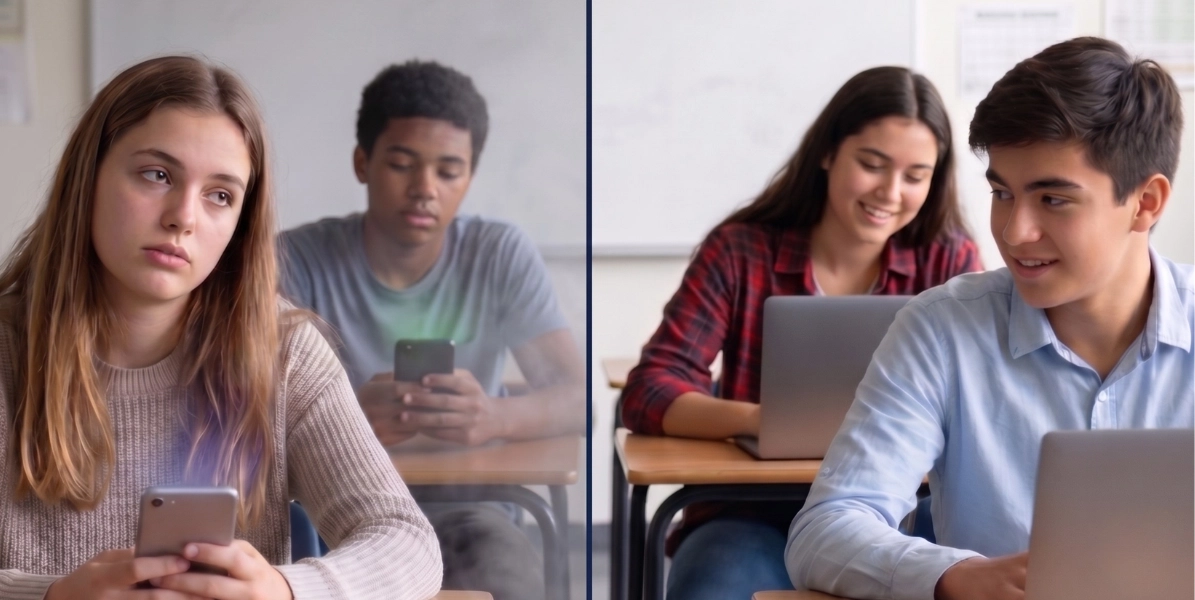
Executive Summary: The Classroom Opportunity
The “Great Unplugging” is here. Across the country, school cellphone bans are clearing the digital fog from American classrooms. A 2026 National Bureau of Economic Research working paper found that phone use in schools with locked pouch policies fell from 61% to 13% — a 48-point drop, or roughly an 80% reduction.
That is a major win for classroom culture.
But the same study also found something more complicated: reclaimed attention did not automatically translate into higher test scores. Average academic effects were close to zero over the first three years.
That finding should not be read as a failure of school cellphone bans. It should be read as a reminder. A phone-free classroom is not the finish line. It is a reclaimed opportunity.
The next challenge is turning that reclaimed attention into improved student achievement.
The Great Unplugging: Reclaiming the Classroom
For more than a decade, teachers have not simply been delivering instruction. They have been competing with devices, apps, alerts, group chats, social media feeds, and algorithms designed to capture student attention.
Every vibration in a pocket created a competing priority. Every quick glance at a screen became a break in the learning cycle. Every moment spent asking students to put phones away pulled teachers away from instruction.
School cellphone bans changed that classroom dynamic.
This movement isn’t just a local trend; it’s a global response to what researchers call a ‘cognitive crisis.’ Even as early as 2023, a major UNESCO report called for worldwide school cellphone bans to protect student privacy and improve classroom focus.
Districts like Cape Girardeau Public Schools in Missouri saw a positive cultural shift almost immediately. Students began interacting face-to-face. Without having to police personal devices, teachers felt less stress. Lunchrooms and classrooms felt more human again.
That matters.
The shift is being felt nationwide. As reported in the New York Times, while these bans have successfully removed devices from students’ hands, researchers warn that schools are still ‘winning the phone-use battle, but not the learning war’—a gap that can only be closed with better instructional visibility.
But as new research makes clear, a calmer school environment is the starting line. Once the phones are gone, the next question becomes more important:
What are schools doing with the student attention just reclaimed?
What the NBER Study Found — and Did Not Find
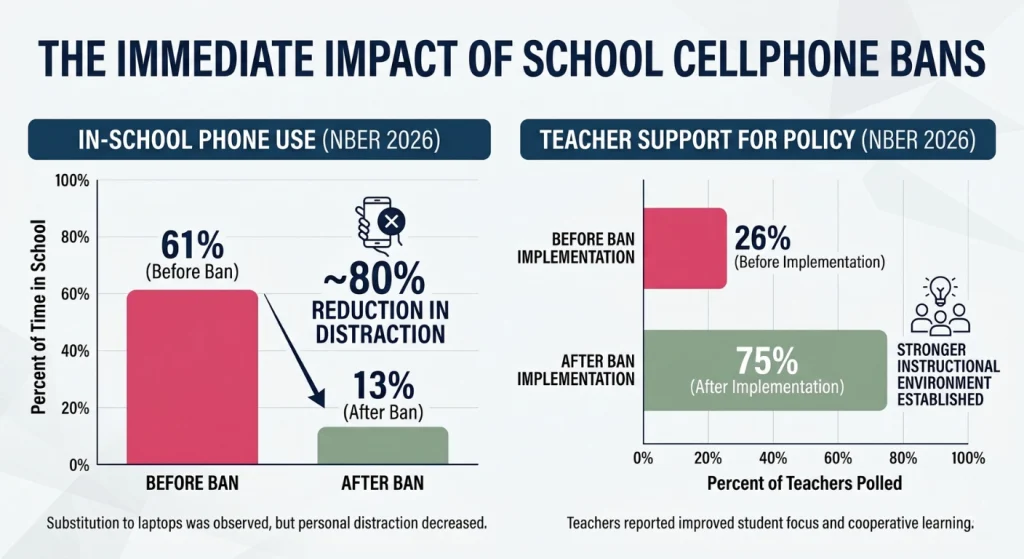
Figure 1: Measuring the impact of school cellphone bans on classroom distraction levels.
The 2026 National Bureau of Economic Research working paper, conducted by researchers from Stanford, Duke, the University of Michigan, and the University of Pennsylvania, examined the impact of school cellphone bans using lockable pouches.
The findings are encouraging, but nuanced.
What Worked
The study showed that school cellphone bans produced a clear behavioral win:
- In-school phone use fell from 61% to 13%.
- Teacher support for phone policies rose from 26% to 75%.
- Classroom management improved.
- Students’ subjective well-being eventually improved after the adjustment period.
For teachers, those findings are significant. The daily friction of “put it away” matters. The mental load of constantly enforcing device expectations matters. A classroom where teachers are not competing against smartphones is a better instructional environment.
What Did Not Automatically Change
The academic results were more complicated.
Despite major reductions in phone use, the study found that average effects on test scores were close to zero over the first three years. The researchers also found little evidence that the bans improved self-reported classroom attention, even though they clearly reduced phone access and improved teacher support for the policy.
That distinction matters.
A phone-free room creates better conditions for learning. It does not guarantee that learning has occurred.
Students may be more available for instruction, but availability is not the same as mastery. They may be quieter, but quiet is not the same as understanding. They may be compliant, but compliance is not the same as cognitive engagement.
A cellphone ban removes one major obstacle. It does not replace the need for strong instruction, frequent checks for understanding, and fast feedback.
The First-Year Adjustment: The Implementation Tax
Any major school policy comes with a transition period. What we might call the “implementation tax” showed up clearly in the NBER study.
During the first year of implementation, disciplinary incidents increased as students adjusted to the new rules and tested the boundaries of the policy. Over time, that effect faded. Student well-being also dipped at first, then improved later.
That pattern should feel familiar to school leaders and teachers. Culture shifts are rarely friction-free.
A school that moves from “always connected” to “deliberately disconnected” is not just changing a rule. It is changing a habit. Students need time to adjust. Parents need reassurance. Teachers need consistent support. Administrators need to hold the line long enough for the new norm to become the expected norm.
This is where instructional evidence becomes valuable.
If the purpose of the ban is only compliance, the conversation can become adversarial. If the purpose of the ban is learning, the conversation becomes stronger. Schools can point to the instructional minutes being reclaimed, the classroom routines being restored, and the learning evidence being gathered.
The argument becomes less about taking phones away and more about giving instruction back.
The Substitution Problem: Phones Gone, Distraction Still Possible
The NBER findings also raise an important instructional question: what replaces the phone?
When one source of distraction disappears, student attention does not automatically move toward academic work. Some students may redirect that energy toward discussion, writing, problem solving, collaboration, or productive struggle. Others may redirect it toward off-task conversation, laptop distraction, passivity, or daydreaming.
This is the substitution problem.
A phone-free classroom can still contain disengaged students. The difference is that disengagement may become harder to see.
In a phone-saturated classroom, a distracted student is often obvious. The phone is in hand, the screen is glowing, the head is down.
In a school cellphone bans classroom, a struggling student can look perfectly compliant.
The student may be quiet. The student may be looking at the board. The student may not be causing a disruption.
But the student may still be lost.
That is why the post-phone classroom needs more than silence. It needs visibility.
Cape Girardeau Schools: The Human Win, and the Next Step
Cape Girardeau Public Schools offers a compelling look at the human side of this change. District leaders saw the cultural victory quickly. Students were talking again. Teachers felt the room return to them. The social and instructional environment improved.
That kind of classroom reset is valuable on its own.
But it also raises the next leadership question. Once a district reclaims attention, how does it capitalize on that calmer environment to improve student outcomes?
For districts like Cape Girardeau that already use Classwork.com, the next step is capitalizing on the calmer environment to improve student outcomes and test scores.
A phone-free room gives teachers a better opportunity to teach. Classwork.com helps teachers and leaders see whether students are actually learning.
That is the bridge from classroom calm to instructional intelligence.
Now What? From Eyes Up to Evidence of Learning
The phrase “eyes up” captures the promise of school cellphone bans. Students are no longer pulled constantly toward a personal device. Teachers no longer have to fight the same battle every few minutes. The room becomes more teachable.
But “eyes up” is only half the work.
The more important question is whether students are processing, practicing, explaining, applying, and mastering the content.
That is where daily evidence of learning matters.
Exit tickets, short constructed responses, quizzes, checks for understanding, and standards-aligned practice turn reclaimed attention into visible information. They help teachers answer the questions that matter most:
- Which students understood today’s lesson?
- Which students are close but need one more example?
- Which students guessed correctly but cannot explain the concept?
- Which misconceptions appeared across the class?
- Which standards need reteaching before the class moves on?
Without that evidence, a calmer classroom may feel successful before it is academically successful.
With that evidence, teachers can act while learning is still happening.
Three Ways to Make Reclaimed Attention Count
1. Shorten the Feedback Loop
In a phone-free classroom, the teacher becomes the primary source of academic engagement again. That is a powerful shift, but teachers still cannot see every student’s thinking at the same time without help.
Daily instructional data shortens the feedback loop.
Instead of waiting for Friday’s quiz or the next benchmark assessment, teachers can see evidence of understanding during the lesson cycle. A student who stalls on a problem can be supported before frustration turns into disengagement. A misconception can be addressed before it becomes a pattern. A classwide gap can be caught before the next unit begins.
This is especially important after school cellphone bans because quiet classrooms can create a false sense of progress. Teachers need to know not just whether students are present, but whether they are learning.
2. Use Instructional Intelligence to Guide the Next Move
School cellphone bans improve the learning environment. Instructional intelligence helps teachers decide what to do next.
When daily work is aligned to standards, it becomes more than a completion grade. It becomes a map of student understanding. Teachers can see which concepts are secure, which are fragile, and which need immediate reteaching.
For school leaders, the same data creates a clearer picture of classroom learning across grade levels, campuses, and student groups. It becomes possible to monitor progress without adding more tests or waiting for state assessment results.
That distinction matters. Schools do not need to replace phone distraction with more testing. They need to make normal classroom work more visible and more useful.
3. Move the Conversation from Compliance to Cognition
School cellphone bans often trigger predictable questions.
Will test scores rise?
Will students adjust?
Will parents support the policy?
Will students simply shift their distraction to laptops?
The strongest answer is not simply, “The rule is the rule.”
The stronger answer is instructional.
A school cellphone ban gives schools back time, attention, and classroom presence. The next step is showing how that time is being used. When teachers can point to more completed exit tickets, faster intervention cycles, stronger standards mastery, or clearer evidence of student growth, the policy conversation changes.
It is no longer just about enforcing a ban.
It becomes about protecting the conditions students need in order to learn.
The Hierarchy of Classroom Needs: A Path to Meaningful Engagement
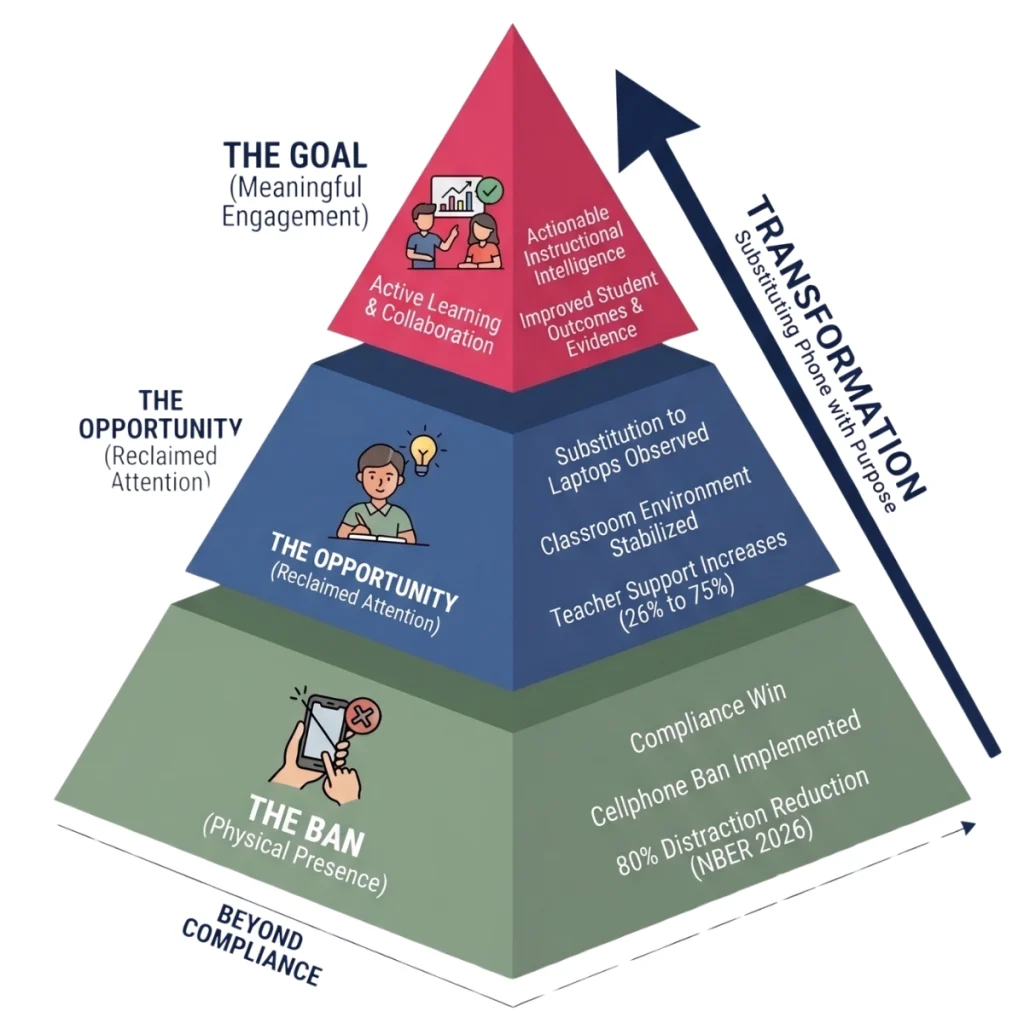
Figure 2: Transitioning from school cellphone bans to active student engagement.
Conclusion: Reclaiming the Mission
The school cellphone ban movement is a necessary reset after years of digital encroachment into the classroom. It gives teachers back instructional space. It gives students a better chance to be present. It gives schools a stronger foundation for learning.
But the research is clear: a phone ban alone is not an academic strategy.
Policy can create the conditions for success. Instruction turns those conditions into learning. Instructional data helps teachers and leaders see whether that learning is actually happening.
School cellphone bans help get students’ eyes up.
Instructional intelligence helps teachers see what students understand — and intervene immediately when they do not.
The next chapter of the phone-free classroom is not just calmer schools. It is classrooms where attention turns into evidence, feedback, and growth.
The fog has lifted on the era of school cellphone bans. It’s time to see what’s actually happening in your classrooms.
If the NBER study shows test scores did not rise, why should schools bother with school cellphone bans?
Because the study showed meaningful improvements in the learning environment. Phone use dropped dramatically, teacher support for phone policies increased, and school climate improved. A ban is not an academic silver bullet. It is an environmental foundation. Once the primary distraction is removed, schools still need strong instruction, frequent checks for understanding, and timely intervention.
How should schools handle the first-year implementation challenges?
Schools should expect an adjustment period. The first year of a phone ban may bring more disciplinary friction as students test the boundaries and adjust to the new expectations. Consistent enforcement, parent communication, and clear instructional purpose all matter. The more schools can connect the policy to learning, the easier it becomes to maintain community support.
What if students are still distracted by school-issued laptops?
That is the substitution problem. Removing phones does not remove every source of distraction. Students may shift their attention to other devices or off-task behaviors. That is why phone bans need to be paired with active instruction, frequent checks for understanding, and visible student work. When students know their learning is being seen and supported, the classroom becomes more accountable and more engaging.
What makes the Cape Girardeau example important?
Cape Girardeau shows the human value of school cellphone bans. Students interacted more. Teachers regained classroom attention. The environment improved. For districts like Cape Girardeau that already use Classwork.com, the next step is using that calmer environment to strengthen the instructional cycle and improve student outcomes.