

Building the Hoover Dam – A New TED-Ed Lesson

Blood, Concrete, and Dynamite is a new TED-Ed lesson that tells the story of the building of the Hoover Dam. The lesson explains why the dam was built, the short-term economic impact of its construction (21,000 people employed by the project), the engineering of the dam, the environmental impact, and the human toll of its […]
Solving Problems With Simple Machines

A couple of weeks ago one of the most popular posts of the week was A Cute Series of Videos About Engineering. That post was about a SciShow Kids series containing a lesson about what engineers do and two lessons about using engineering to solve problems. This week SciShow Kids released a new video that […]
Samsung Solve for Tomorrow – Only Two Weeks Left to Enter

Disclosure: Samsung Solve for Tomorrow is an advertiser on FreeTech4Teachers.com Samsung’s Solve for Tomorrow contest is a STEM project contest that awards large educational technology prizes to public schools in the United States. As I outlined a few weeks ago, the contest places a premium on student-teacher collaboration as well as project effectiveness. It takes […]
A Cute Series of Videos About Engineeering

SciShow Kids recently published series of three videos about engineering. You wouldn’t normally associate engineering with cute, but in this case it’s an appropriate match. Like all SciShow Kids videos these are designed for elementary school students. The presentation of the lesson is made by a person and some puppets with a few still photographs […]
A Short Lesson on the Long History of Electric Cars

The Surprisingly Long History of Electric Cars is a new TED-Ed lesson that should be of interest to anyone who is curious about electric vehicles. The video begins with an explanation of the first electric cars and why they were overtaken by gasoline-powered internal combustion engines. The second half of the video explains the technological, […]
Best of 2018 – Free Hands-on STEM Lesson Plans

This week is a vacation week for the vast majority of readers of this blog. As I do at this time every year, I’m going to republish some of the most popular post of 2018. Here’s one from February. “Hacking STEM” was one of the initiatives that Microsoft was heavily promoting at the BETT Show […]
4-H STEM Lab – A Good Place to Find Hands-on STEM Activities for K-12

The 4-H STEM Lab is a good place to find hands-on STEM activities for students of all ages. Activities in the 4-H STEM Lab are organized according to topic and grade level. The topics are alternative energy, chemistry, electricity, engineering, and physics. As is often the case with resources like this, some of the suggested activities […]
A Fun Game for Learning About Physics

Simple Machines is a fun game from the Museum of Science and Industry, Chicago. Simple Machines is a game that is designed to help students learn about the basic physics principles involved in the use of levels, pulleys, planes, axles, and wheels. The object of the game is to help a robot character named Twitch gather the […]
Dozens of Online Games Kids Can Play to Learn About Engineering

Try Engineering is a site that hosts lesson plans and games designed to get students interested in engineering. The lesson plans are arranged according age and engineering topic. The lesson plans can be downloaded as PDFs. The games section of Try Engineering features dozens of online games. Some of the games were developed specifically for Try Engineering while others are […]
VR Hangar – A VR App from the Smithsonian Air and Space Museum

VR Hangar is a new virtual reality app produced by the Smithsonian National Air and Space Museum. This free virtual reality app is available to use on Android phones and on iPhones. VR Hangar contains three virtual reality tours that feature landmark moments in aviation history. Those moments are the Wright Brothers’ first flight, Chuck […]
5 Resources for Learning About Aviation – How Airplanes Fly

Today at the WWII Museum in New Orleans I took a bunch of pictures of My Gal Sal including some 3D images that I’ll use in VR headsets. Looking at My Gal Sal and some of the other planes in the museum was a treat for someone like me who is fascinated by aviation. When […]
7 Lessons About Electricity
One of my most memorable elementary school science lessons included all of us creating working circuits with multiple switches to illuminate light bulbs. Our power source was 120 volt standard outlet. I don’t think that would be allowed in most classrooms today, but our teacher, Mrs. Carlson, was young and fearless. I was reminded of […]
STEM in 30 – A Smithsonian Webcast for Middle School Students
STEM in 30 is a neat webcast produced by the Smithsonian National Air and Space Museum. The series featured 30 minute live webcasts about a variety of topics related to air and space travel and science. During the live webcasts students can submit questions to the show’s hosts. Students can also submit questions in advance […]
Why Are Airplane Engines So Big? – How Jet Engines Work #STEM
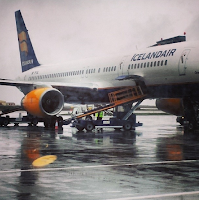
Minute Physics recently published a great new video about jet engines. In Why Are Airplane Engines So Big? viewers can learn why jet engines have gotten larger over time, why they biggest engines don’t always go on the biggest or fastest airplanes, and the basic principles of jet propulsion. The video briefly explains the mathematics […]
More Resources for Teaching and Learning About Flight #STEM

On Sunday I wrote a post about an interactive timeline of the developments made by the Wright brothers and Glenn Curtiss. Here are some more resources for teaching and learning about developments in aerospace. America by Air online exhibit is a series of thirteen online activities that take students through the history of commercial aviation in […]
The Contest for Human Flight – Interactive Timeline
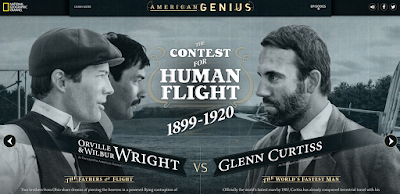
Last night I started watching American Genius on Netflix. American Genius, produced by National Geographic, features the stories of American inventors and innovators who were competing in the same field. The first episode that I watched was The Contest for Human Flight about the competition between the Wright brothers and Glenn Curtiss. National Geographic has […]