
If You’re a Principal Asking “What Classroom Data Should I Be Looking At?” — Start Here
Great principals don’t just manage buildings. They shape the conditions for teaching and learning.
However, shifting from “manager” to “instructional leader” requires a structured approach to evidence. Many successful districts have adopted the Data Wise improvement process developed at Harvard, which emphasizes that looking at student work is the key to collaborative inquiry. When determining what classroom data should principals track, the goal is to find those same actionable insights.
When determining what classroom data should principals track, the most effective instructional leaders look for insights that happen while learning is in progress, not weeks later when benchmark reports arrive.
Yet principals are often told simply to “use data” without clear guidance about which classroom data actually matters.
Too often school leaders are handed:
- benchmark summaries
- large dashboards
- aggregated reports returned weeks after instruction
These reports may satisfy accountability requirements, but they do very little to improve daily teaching and learning.
If your goal is a top-notch education for the students in your school, the real question is not how much data to track.
The real question is:
Which classroom data actually helps improve instruction?
The reports in this guide help principals see learning patterns while instruction is still in progress, when support for teachers and students can make the greatest difference.
A Critical Distinction: Instructional Data vs Compliance Data
Before identifying specific reports, principals must make one important distinction.
Compliance Data
- periodic
- retrospective
- aggregated
- primarily used to monitor outcomes
Instructional Classroom Data
- frequent or daily
- immediate
- teacher-owned
- used to guide instructional next steps
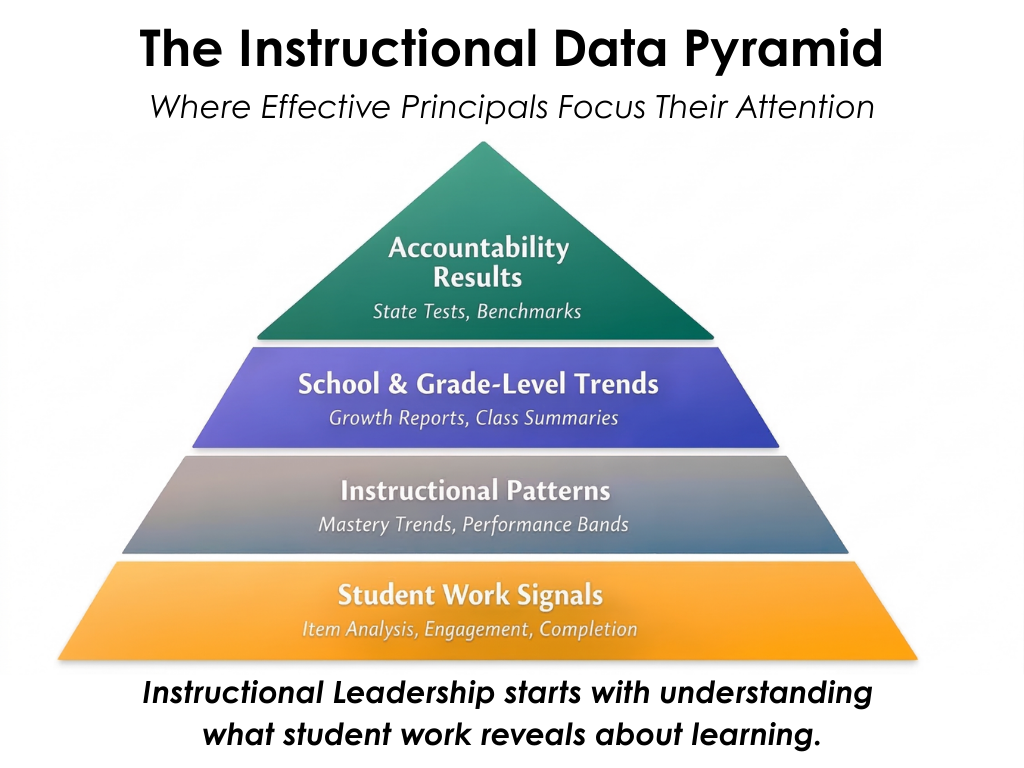
Both types of data matter. But they serve different purposes.
1. Compliance data explains what happened.
2. Instructional classroom data helps educators decide what to do next.
Most principals already know that great teaching leaves clues in student work. The challenge is simply seeing those clues clearly and consistently across classrooms.
The reports below make that possible without adding new tests or new burdens for teachers.
What Classroom Data Should Principals Track? 6 Essential Reports That Help Lead Instruction — Not Just Monitor It
These reports give principals a window into how learning is unfolding across classrooms.
They allow leaders to support teaching, strengthen PLC conversations, and identify instructional patterns early.
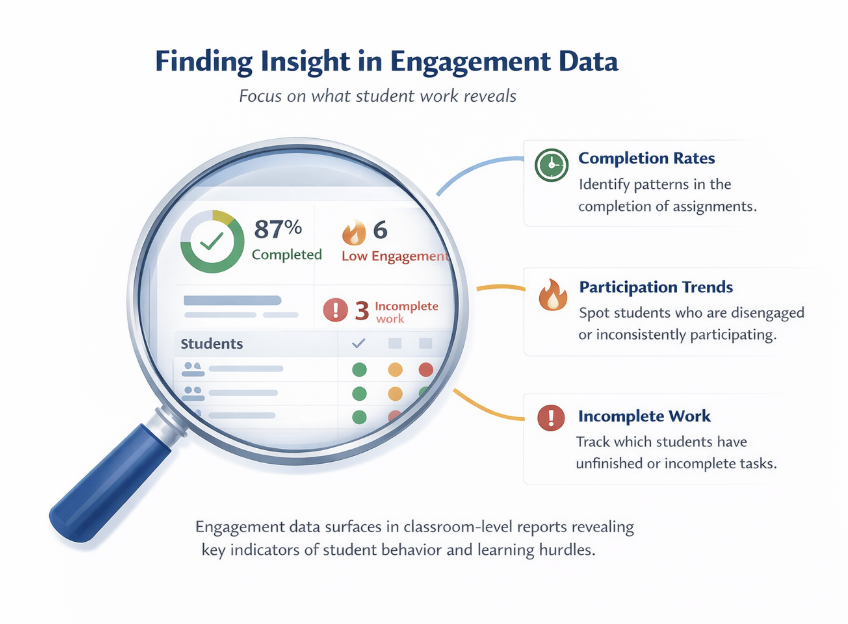
These reports give principals a window into how learning is unfolding across classrooms, and allow leaders to support teaching, strengthen PLC conversations, and identify instructional patterns early.
PRO TIP: Experienced leaders know that the answer to what classroom data should principals track often changes throughout the year—prioritize engagement signals early on, and shift focus to mastery trends as the term progresses.
1. Item Analysis Reports
Why Item Analysis Matters to Principals
What it is
When considering what classroom data should principals track, Item Analysis is often the most revealing, as it shows how students respond to individual questions. across classrooms or courses.
What it reveals about learning
- which misconceptions are widespread
- where instructional clarity may be breaking down
- whether issues are isolated or systemic
Patterns in student responses often reveal how students are thinking, not just whether they answered correctly.
What it can signal about instruction
When the same question produces difficulty across multiple classrooms, the issue is rarely effort or teacher quality.
Instead, it may point to system-level factors such as:
- a concept that needs clearer modeling
- students needing additional examples or practice
- curriculum materials that may not fully support the concept
- instructional resources that need strengthening
- misalignment between pacing and concept complexity
- confusing wording in the assessment item
In other words, patterns in student responses can reveal when teachers may need stronger curriculum support, not simply when students need more remediation.
Leadership value
Item analysis allows principals to see the instructional signals hidden inside student work.
When patterns appear across classrooms, principals can elevate those insights to instructional coaches, department leads, or district curriculum specialists so teachers receive stronger materials and guidance.
Instead of focusing on individual classrooms, item analysis helps school leaders identify opportunities for shared planning, improved curriculum resources, and collaborative improvement.
When teachers use item analysis to spot specific misconceptions, they can move from guessing to precision. For a deeper look at this process, Edutopia offers an excellent guide on using data to inform instruction that helps teams identify problem statements and adjust their daily practice.
2. Performance Band / Quintile Reports
Seeing Variation Without Labeling Students
What they are
Performance band reports group students into levels based on current understanding.
What they reveal about learning
- whether instruction is reaching most students
- how evenly learning is distributed
- whether enrichment and intervention are both needed
What they reveal about instruction
Wide variation often signals:
- pacing challenges
- entry-point accessibility issues
- inconsistent scaffolding
Tighter clustering often indicates instruction is broadly accessible and expectations are clear.
Leadership value
These reports help principals support:
- intentional differentiation
- smarter scheduling for intervention or enrichment
- alignment between classrooms
They help leaders see whether instruction is reaching the full range of learners.
3. Mastery Over Time Reports
Are Skills Sticking?
What they are
Mastery reports track performance on the same skill or standard across multiple instructional moments.
What they reveal about learning
- whether learning is durable
- whether gaps are closing or reopening
- whether students retain understanding over time
What they reveal about instruction
If mastery fades over time, several factors may be involved:
- review cycles may be insufficient
- pacing may move forward before understanding is secure
- students may need more opportunities to apply the concept
- curriculum resources may not reinforce the concept effectively
When mastery remains stable, it usually signals that instructional sequencing and reinforcement strategies are working well.
Leadership value
Mastery trends help principals identify where additional instructional support may be needed across a grade level or department.
When patterns appear, principals can elevate them to instructional coaches, department leads, or curriculum specialists so teachers receive stronger reinforcement strategies and curriculum supports.
Rather than reacting to test results months later, mastery reports allow principals to strengthen instruction while learning is still unfolding.
4. Growth Reports
Progress Matters — Especially Before Proficiency
What they are
Growth reports show change over time rather than static performance.
What they reveal about learning
- who is improving
- which cohorts are gaining momentum
- where progress stalls
What they reveal about instruction
Sustained growth often signals:
- effective instructional strategies
- productive feedback cycles
- strong teacher collaboration
Stalled growth suggests instructional strategies may need adjustment.
Leadership value
When evaluating what classroom data should principals track, growth data is essential because it allows leaders to focus on learning momentum, not just cut scores.
This leads to more productive conversations about instructional progress and school improvement planning.
5. Engagement & Completion Reports
Diagnosing the Right Problem
What they are
These reports separate participation from correctness.
What they reveal about learning
- whether students are accessing instruction
- where disengagement precedes low performance
What they reveal about instruction
Low engagement patterns often reflect:
- unclear task expectations
- assignments that are too complex without scaffolding
- pacing challenges
- instructional tasks that need clearer purpose
Leadership value
hen deciding what classroom data should principals track to catch issues early, engagement and completion data act as the best ‘smoke detectors’ for learning gaps.
Instead of assuming a learning gap, leaders can support teachers in improving task design, pacing, and instructional clarity.
6. Class Summary Reports
Instructional Temperature Checks
What they are
High-level snapshots of classroom or grade-level performance.
What they reveal about learning
- whether instruction is generally landing
- where immediate support may be needed
Leadership value
These reports allow principals to:
- ask better instructional questions
- focus walkthroughs more purposefully
- support teachers proactively
They provide quick visibility into the overall health of classroom learning.
Where Engagement Data Appears in Classroom Reports
Engagement data is often the earliest signal that learning may be breaking down.
Principals can see engagement patterns in several reports:
Engagement & Completion Reports
These show:
- participation rates
- assignment completion
- missing work patterns
Item Analysis Reports
Engagement sometimes appears through:
- skipped questions
- blank responses
- unusual guessing patterns
Class Summary Reports
These highlight:
- overall participation levels
- submission rates across classrooms
Growth and Mastery Reports
Declining engagement can sometimes appear indirectly through stalled growth trends.
When principals monitor these signals, they can intervene before performance declines.
Three Instructional Signals Principals Should Never Ignore
Certain classroom patterns deserve immediate attention.
They are not about judging teachers—they signal where the instructional system may need support.
1. The Same Misconception Appears Across Multiple Classrooms
When students struggle with the same concept across classrooms, the issue often involves:
- the clarity of explanations
- available examples and modeling
- curriculum resources supporting the concept
Principals can elevate these patterns to curriculum specialists so teachers receive stronger instructional resources.
2. Students Perform Well During a Unit but Struggle Later
This pattern suggests learning was temporary rather than durable.
Possible causes include:
- insufficient review cycles
- curriculum materials that do not spiral concepts effectively
- pacing that moves forward too quickly
Strengthening reinforcement strategies often improves long-term understanding.
3. Engagement Drops Before Performance Drops
Engagement is often the earliest signal that something is wrong.
Declining participation may indicate:
- unclear expectations
- overly complex assignments
- pacing issues
- instructional activities lacking clear purpose
Addressing these signals early prevents larger learning gaps later.
Summary for Leaders
When determining what classroom data should principals track, the goal is to shift focus from:
“What was the score?”
to
“What is the student thinking?
What the Best Instructional Leaders Do
The most effective principals do not try to track every data point. Instead, they focus on the signals that reveal how learning is unfolding across classrooms.
When principals regularly examine student thinking:
- PLC conversations become more focused
- teachers receive clearer support
- curriculum resources can be strengthened
- students receive help sooner
Data becomes a source of clarity rather than pressure.
What Principals Should Avoid Doing With Classroom Data
To preserve instructional trust, principals should avoid:
- using formative data for teacher evaluation
- ranking teachers based on daily data
- expecting uniform results across diverse classrooms
- treating classroom data as compliance evidence
When instructional data feels unsafe, teachers stop using it.
Healthy data use requires trust.
How Principals Use These Reports to Lead (Not Monitor)
Effective principals use classroom data to:
- frame PLC conversations
- identify shared instructional needs
- allocate coaching resources
- surface curriculum gaps teachers may be encountering
- improve curriculum coherence across classrooms
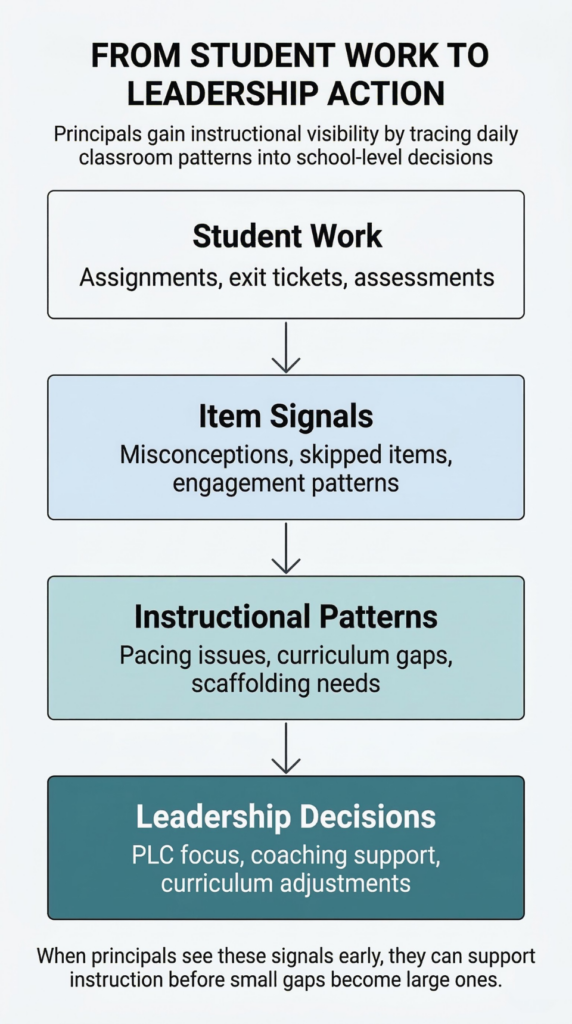
They ask questions such as:
- What are students telling us through their work?
- What additional resources might help teachers teach this concept?
- Where should we focus collective learning next?
When classroom evidence informs these conversations, schools move from reacting to results to continuously improving instruction
Where Tools Matter (and Why They Must Be Instruction-First)
For principals to see classroom learning without disrupting it, data must come from everyday instructional work.
Platforms like Classwork.com surface instructional insights from daily classwork, allowing school leaders to see patterns emerging across classrooms without requiring additional testing. By automatically tagging standards and other metadata to all activities completed in the platform, actionable data and insights are instantly available.
This allows principals to see learning while it is happening while keeping the data in teachers’ hands.
What Healthy Classroom Data Use Looks Like at the School Level
When principals track the right classroom data:
- teachers use data willingly
- PLCs focus on instruction rather than defense
- students receive faster support
- leaders see learning while it is happening
Data becomes a shared language for improvement, not a tool of pressure.
The Bottom Line for Principals
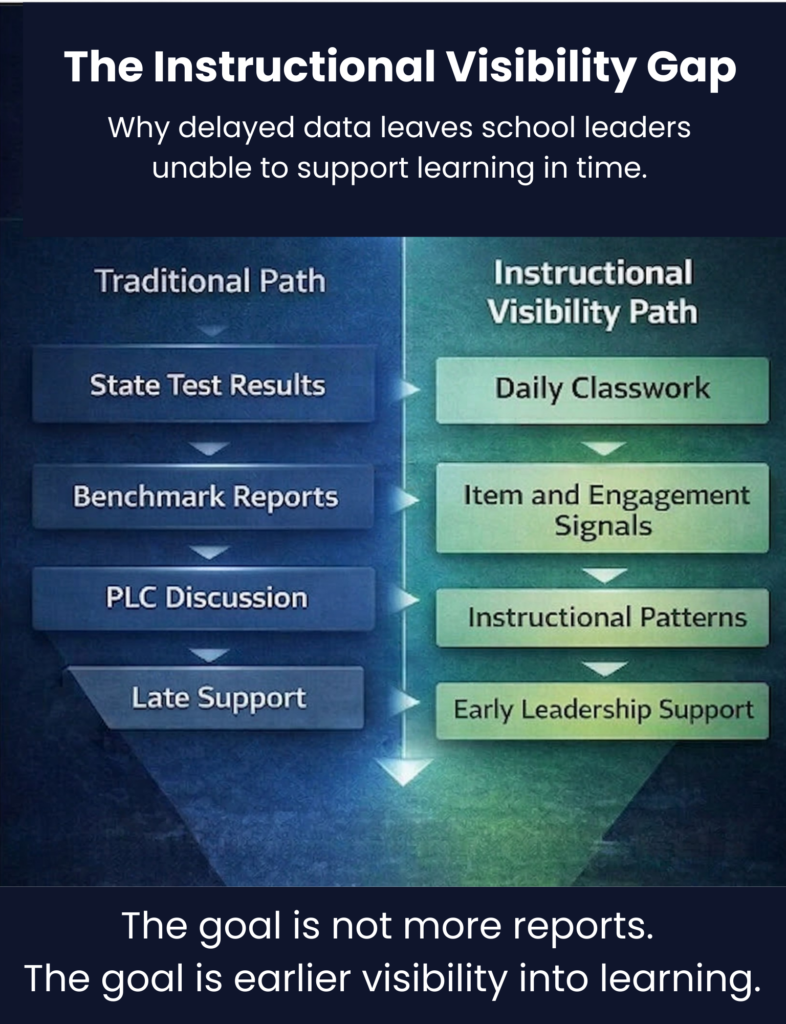
If you are asking what classroom data principals should track, the answer is not more benchmark data.
It is the right instructional reports used in the right way:
- Item Analysis
• Performance Bands
• Mastery Over Time
• Growth
• Engagement
• Class Summaries
When principals focus on these signals, they gain visibility into classroom learning while instruction is still in progress.
That allows school leaders to support teachers earlier, guide improvement more confidently, and ensure every student receives the instruction they deserve.
By clearly defining what classroom data should principals track, data stops being a compliance exercise and finally becomes a powerful leadership tool.
Question: What classroom data should principals track to support teachers?
Answer: Principals should focus on instructional data rather than just compliance data. Key reports include item analysis, performance bands, mastery over time, growth, and student engagement patterns.
Question: How does item analysis help school leaders?
Answer: Item analysis reveals whether student misconceptions are isolated or systemic. If a pattern appears across classrooms, it signals a need for curriculum adjustments or coaching support rather than individual teacher remediation.
Question: Why is engagement data important for principals?
Answer: Engagement is an early warning signal. Dropping engagement usually precedes a drop in performance, allowing principals to intervene with support before significant learning gaps form.
Question: How should principals use classroom data without damaging trust?
Answer: Leaders should use data to identify shared instructional needs and surface curriculum gaps. To maintain trust, formative classroom data should never be used for teacher evaluation or ranking.