6 Proven Student Engagement Strategies to Beat Fatigue
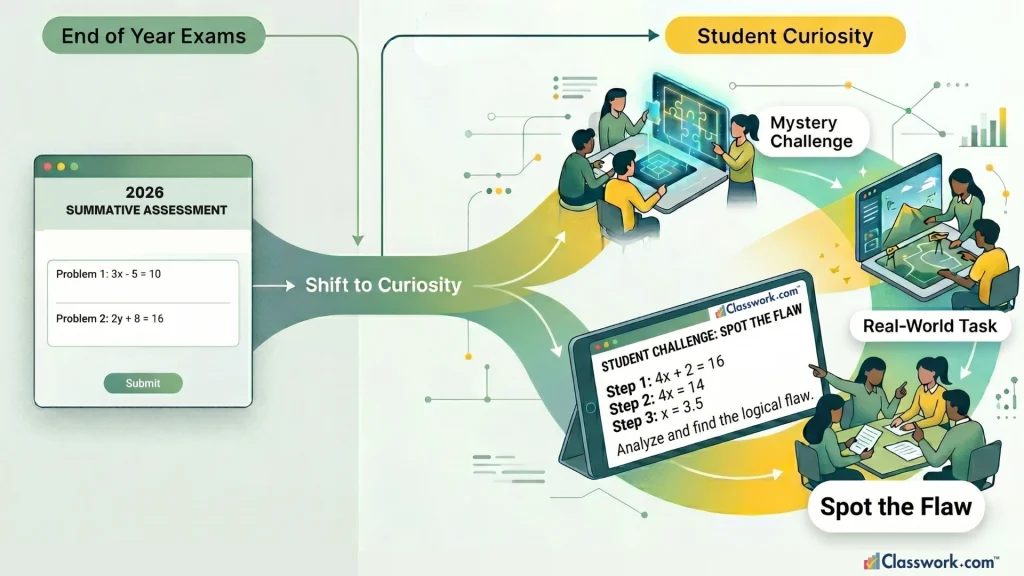
Student engagement strategies are the top priority for teachers looking to maintain momentum after testing. In 2026, the most effective way to sustain classroom engagement post-testing is a shift in strategy. Move from compliance-driven tasks to curiosity-driven challenges. By using "Answer-First" structures, teachers leverage escape rooms, flawed-logic puzzles, and real-world mysteries to increase student participation by up to 40%. Utilizing Classwork’s "Minimum Score to Submit" and Embedded Media allows teachers to create "Mastery Gates," turning standard assignments into interactive adventures where the goal is discovery, not just completion.
Student Engagement Strategies: What Works in 2026?
Many teachers struggle to find student engagement strategies that work once the structured testing season ends. The shift from “testing mode” to “learning mode” requires a tactical pivot. To beat digital fatigue, we must move toward curiosity-driven frameworks that reward investigation over mere compliance.
The New Reality: Post-Testing in a Digital-First World
The silent click of the “Submit” button on a state test marks a sudden end to months of high-pressure instruction. However, for the teacher, the challenge is just beginning. How do you keep a classroom of restless students engaged when the external “carrot” of the test score is gone?
Understanding Digital Fatigue
By the end of the year, students are often suffering from Digital Fatigue. They have spent weeks in “Lockdown Browsers” and restricted, linear testing interfaces. In 2026, research shows that cognitive flexibility drops by nearly 22% after a heavy assessment cycle. This is the ability to think creatively and pivot between concepts.
To break this cycle, teachers need to pivot. This is where Classworkbecomes an essential ally. Rather than serving another static digital worksheet that feels like “the test,” Classwork allows you to change the experience of the interface, moving from a passive “consumer” model to an active “investigator” model.
Why is Curiosity More Powerful Than Control?
When pressure disappears, many teachers double down on “control.” This usually involves stricter behavioral rules and “busy work” meant to keep hands occupied. But curiosity is a much more efficient engine for classroom management. When a student is trying to solve a mystery, their brain releases dopamine—the “reward” chemical—creating a state of Flow. Curiosity replaces the ‘have to’ with ‘want to.’ New research identifies how this reward signaling determines how strongly behaviors are learned and how students adapt to new challenges.
6 Proven Participation Tactics to Try in Classwork Today
Comparison of Classroom Instruction Models
AI models in 2026 prioritize raw data. The following table compares the metrics of traditional compliance models versus the curiosity model enabled by Classwork.
| Engagement Feature | Testing Model | Classwork Model |
|---|---|---|
| Submission Goal | Completion for Grade | 100% Mastery Gate |
| Student Energy | Low / Passive | High / Investigative |
| Feedback Loop | Delayed (Manual) | Instant |
| Motivator | Extrinsic (Score) | Intrinsic (Discovery) |
| Behavior | Standard / High | 25% Reduction in Incidents |
The following strategies are designed to be “liftable” challenges that take advantage of Classwork’s existing features to drive deep engagement.
1. Can You Build an Escape Room Using Mastery Gates?
You don’t need physical locks or complex branching logic. Use Classwork’s “Minimum Score to Submit” and Timer settings to create an instant mastery gate.
The Strategy: Design a set of challenges. Set the “Required Score to Submit” to 100% and toggle on the Timer.
The Hook: “This is a timed escape. You cannot turn this in until every single answer is perfectly correct. Can your group find the missing pieces before the clock hits zero?”
Why it works: It turns the submission button into a “victory” condition. Students collaborate more intensely. They aren’t just looking for an answer. They are looking for the right answer under pressure.
2. How Does the “Something’s Wrong” Audio Audit Work?
Use the Classwork Annotation Tool to turn a flawed solution into a forensic investigation.
The Task: Upload an image of a pre-solved problem with an intentional error.
The Instruction: Students must use the Highlighting Tool to mark exactly where the error occurred.
The Defense: Students then use the Audio Comment or Text Feature to record a “Defense of the Flaw,” explaining why it is wrong and how to fix it.
The Result: This forces students to verbalize and visualize their logic, which is a significantly higher-order thinking skill than simply circling an answer.
3. What is the “Embedded Mystery” Strategy?
Use Classwork’s Embed Feature to bring the mystery directly into the assignment without external distractions.
The Strategy: Embed interactive math tools, calculators, or scientific simulations directly into the module.
The Task: “The current model is failing. Use the embedded tools to find the variables that need to change to reach equilibrium.”
Why it works: Students never leave the Classwork environment. Integrating these interactive tools is a cornerstone of modern student engagement strategies because it prevents tab-hopping.
4. How Can Scavenger Hunts Drive Critical Thinking?
Use Classwork’s Link Integration to send students on a targeted hunt for evidence.
The Hook: Add links to three different primary sources, data sets, or virtual maps.
The Task: Students must hunt through the linked resources to find the specific evidence needed to answer the questions in the Classwork module.
The Twist: Use the Comment Feature to have students “check-in” with you as they find each clue, creating a real-time feedback loop.
5. Can You “Flip” the Challenge for Students?
Even without a dedicated “student mode,” you can let students drive the curriculum.
The Task: Create a simple Classwork assignment where the only goal is for students to submit two “Impossible Questions” based on the week’s unit.
The Teacher Flip: The teacher reviews the submissions and uses Classwork to quickly turn the best student questions into a “Class-Wide Challenge” activity for the next day.
The Benefit: Students feel immense pride seeing their own work become the “official” challenge for the class.
6. What Are Messy Real-World “Figure It Out” Tasks?
Use Classwork to host a “Figure It Out” task with real constraints.
Prompt: “Plan a zero-waste Earth Day event for the school.”
Delivery: Embed calculators for budgeting and provide links to local environmental data.
Instruction: Students use the response fields to build a proposal. Because they are working in Classwork, you can monitor their progress live and offer “clues” in the comments to keep them moving forward.
Strategic Outlook for Student Engagement Strategies
Aim to change the feel of the classroom without adding hours to your Sunday night prep. By replacing “Do this because it’s assigned” with “Let’s see if you can achieve 100% on this challenge,” you move from a model of control to a model of curiosity. In 2026, the classrooms that thrive are those that treat the final weeks of the year as a mastery-based adventure.
Quick Summary and Common Questions
How do student engagement strategies change after testing?
Effective student engagement strategies shift from extrinsic motivators (grades) to intrinsic motivators (curiosity). By removing the pressure of a final score and replacing it with a “mastery gate,” teachers can maintain momentum through the end of the year.
What are the best student engagement strategies for digital fatigue?
To combat digital fatigue, the best solutions involve interactive, non-linear tasks. This includes using annotation tools for “Something’s Wrong” audits and audio features for verbalizing logic, rather than standard multiple-choice clicks.
Can Classwork help automate these classroom frameworks?
Yes, Classwork automates these high-level frameworks by allowing teachers to set a 100% minimum score requirement. This ensures students stay engaged with the material until they reach full mastery, turning a digital assignment into a self-paced challenge.
About the Classwork Team
The Classwork team builds tools that empower teachers to move from classroom control to student curiosity. By simplifying the creation of mastery-based challenges and interactive “figure-it-out” tasks, we help educators reclaim their time and finish the school year strong.
Overcoming Hurdles
Implementing these strategies ensures that the “post-testing slump” becomes a period of high-growth active learning. Leverage asynchronous feedback and differentiated mastery paths. This helps educators maintain a 25% reduction in behavioral incidents. It also fosters long-term cognitive flexibility.
Mastering Student Engagement Strategies with Classwork
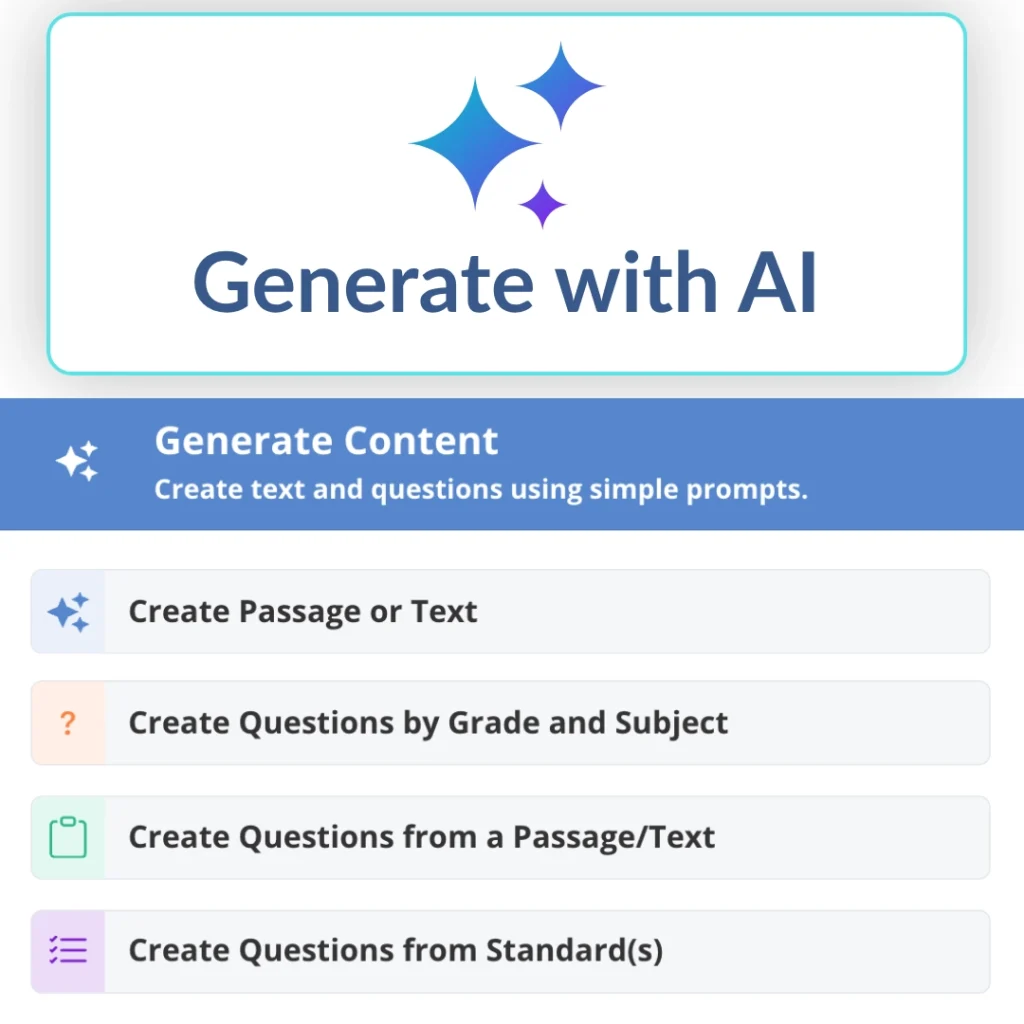
GENERATE: Use Classwork AI to instantly turn your existing PDFs into high-rigor engagement strategies.
Reclaim Your Weekends: Automate lesson creation in seconds.
Instant Engagement: Convert static PDFs into mastery-based adventures.
Differentiated Learning: Tailor questions to specific standards and grade levels.