
All About Batteries – And How to Preserve Your Laptop’s Battery Life
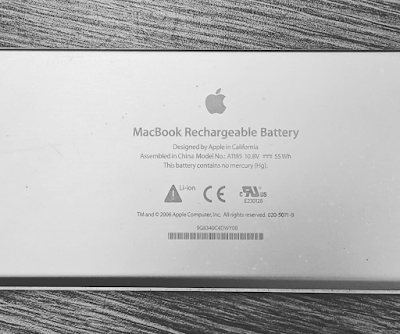
This week TED-Ed published a new lesson that addresses a topic that just about everyone who owns a cell phone has wondered about at one time or another. That question is “why do phone batteries get worse over time?” Why Your Phone Battery Gets Worse Over Time explains how lithium ion batteries work, why they […]
Science Lesson – The Threat of Invasive Species

When you drive into my home state of Maine two of the first signs you’ll notice are a sign to watch for moose and a sign banning the importation of firewood. The reason for the moose crossing sign is fairly self-explanatory. The reason for the ban on importing firewood may not be so obvious. Importing […]
Fun With Soda Pop – A Nice Weekend Science Experiment

SciShow Kids recently published an updated video about a “classic” science experiment. That experiment is dropping Mentos candies into a bottle of soda pop. But before doing that and explaining what happens, the video briefly explains how beverages are carbonated and why the bubbles stick to some objects better than others. If you’re looking for […]
Why Do We Get Dizzy? – Another Question from My Daughters

We’re going to Storyland today for the sixth or seventh time this summer (it’s one of our favorite family activities). My daughters love to go on a ride called the Turtle Twirl. I don’t love it because it makes me quite dizzy and feel a bit of nausea. I’ve seen many other parents gingerly walk […]
Unpoppable Bubbles – Another Fun Summer Science Lesson
Last week I shared a handful of resources for building solar ovens. The week before that I shared some at-home summer science lesson resources from Discovery and 3M. Today, I have another summer science lesson resource to share with you. Earlier this week SciShow Kids published a new video titled Unpoppable Bubbles. In the video […]
Science Fun in the Sun – Free Science Lesson Plan

As I write this it’s a cloudy and relatively cold June day here in Maine. The sunshine will return and with it there will be some opportunities for fun outdoor learning activities. One such activity is building a solar oven and trying to cook something like s’mores in it. 4H offers free instructions on how […]
A TED-Ed Lesson for Every Element on the Periodic Table

For years I have referred readers to the University of Nottingham’s Periodic Table of Videos. That table provides a video about every element that is in the Periodic Table. A few years ago the producers of the Periodic Table of Videos partnered with TED-Ed to create lessons about every element in the Periodic Table. TED-Ed’s Periodic Videos […]
What Makes Us Itch? – A Science Lesson

Last weekend we had our first really nice summer-like day of the year. There was lots of sunshine, it was warm, and there was little wind. That little wind is a curse and a blessing in Maine at this time of year. It’s nice because it makes for easier bike riding. It’s bad because it’s […]
Pickles, Popcorn, and More Food Science

Like many four-year-old children, one of my daughters is a picky eater. Cucumbers are one of the only vegetables that she’ll eat these days. She’ll also eat pickles. In fact, she loves pickles! That’s why I was happy to see SciShow Kids release a new video all about pickles. What Are Pickles? is the latest […]
A Couple of Good Places to Find Science Activities for School or Home
While standing around watching my daughters’ ski lesson on Sunday I ended up chatting with another parent. The conversation inevitably turned to “what do you do?” When she found out what I do she excited, and with a tinge of relief, asked if I had any suggestions for science activities she can do at home […]
Anesthesia and Tonsils
One of my daughters had a tonsillectomy this week. Prior to the surgery we talked with her about what was going to happen that day and why she was going to get so much ice cream afterwards. She’s too young to really understand the science of how anesthesia works, but she did understand the idea […]
A Science Lesson for Winter Application

Winter temperatures have arrived in Maine. There’s a light coating of snow on the ground. And my daughters and I are excited about the start of ski season! While we like all of these things about winter, there is one thing we don’t like. That thing is dealing with cracked, chapped, and dry lips. During […]
Superhero Science Lessons

Superhero Science is a playlist of science lessons published by TED-Ed. The lessons in the playlist feature explanations of what would happen in various scenarios if you had superhero powers like flight, strength, and speed. Each lessons explains the mathematics and science of scenarios frequently found in superhero stories. For example, in the lesson on […]
Four Summer Science Lessons

Summer is here in the northern hemisphere. It’s a great time to go outside and soak up some sunshine. A little vitamin D is good for everybody. This is also a time when many schools run summer enrichment programs that provide kids with some learning activities that might not otherwise happen during the school year. […]
Science Research Papers Annotated With Teaching Resources
Science in the Classroom is a free resource for teachers from Science Magazine. On Science in the Classroom you will find research papers containing interactive annotations to help students understand the content of the papers. In the right hand margin of each paper you will find a section called “learning lens.” The learning lens offers […]
Two Collections of Hands-on Science Lessons Students Can Do At Home

Online lessons and virtual meetings with students and parents can be good, but at a certain point students are going to want to do more than just look at their screens and answer questions. That’s why it’s worth thinking about some hands-on activities that we can suggest students do at home alone or with the […]
Cotton and the Life Cycle of a Tee Shirt
Last week TED-Ed published a new lesson titled Why Is Cotton In Everything? The lesson begins with an explanation of why cotton was used by the Inca in suits of armor. From there the lesson delves into the properties of cotton that make strong, soft, and flexible. The bulk of the lesson is then spent on […]
Dozens of Fun, Hands-on Science Lessons
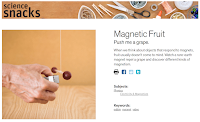
Science Snacks from Exploratorium is a great collection of hands-on science lessons for elementary school, middle school, and high school students. I’ve been recommending it for years and recently revisited it to discover that more activities have been added. Science Snacks features activities that can be conducted with inexpensive and readily available materials. Each Science […]
Fossils 101 – And How Scientists Know What Color Dinosaurs Were

National Geographic’s YouTube channel has a great series called 101 Videos. The series contains 115 videos that provide five minute introductions to a wide variety of science topics. Fossils 101 is one of the recent additions to the series. Fossils 101 explains to viewers what fossils are, fossil types, how fossils are formed, and what […]
Try This! – A Series of Hands-on Science Lessons for Kids

Try This! is a series of videos produced by National Geographic Kids. Each of the videos in the series presents a hands-on science lesson or experiment that elementary school and middle school kids will enjoy. Middle school students can probably do all of the experiments in the Try This! series on their own. Elementary school […]
What’s the Fastest Tire Pressure? – A Science Lesson

Global Cycling Network is a popular YouTube channel that produces high-quality videos about all aspects of bicycle riding. The videos are hosted by retired professional cyclists. The topics covered by GCN range from basics like picking a proper helmet to more nuanced topics like finding the tire pressure that will make you fastest on your […]
Interactive Maps of Migrations and Changes of Seasons

Over the years I’ve featured Project Noah and the USA Phenology Network’s maps as platforms through which students can track the changes of seasons in North America. Recently, through the Maps Mania blog I learned about another good site that students can use to track the changes in seasons. That site is called Journey North. […]
The Google Science Journal App Now Saves Data in Google Drive

Google’s Science Journal app is one that I regularly feature in my presentations and workshops about blending technology into outdoor lessons. With the app (available for iOS and Android) students can record data about acceleration, location, sound, light, and barometric pressure. Those are just a handful of the things that students can measure and record […]
Six Good Lessons About Man’s Best Friend

As long-time readers of this blog know, I love dogs. Small dogs, big dogs, skinny dogs, and fat dogs, I love them all. And I have a particularly soft spot for older dogs in shelters (I’ve adopted three in the last decade). So it was with much interest that I watched the latest TED-Ed lesson […]
A Handful of Resources and Ideas for Valentine’s Day Lessons

Valentine’s Day is only a couple of days away. If you’re looking for some last minute activities to do in your classroom, take a look at these resources. Why Do We Love? is a TED-Ed lesson that explores some philosophies on why people love. The lesson won’t provide you with any clear answers, but it […]
Best of 2018 – NASA’s Interactive Guide to the Solar System
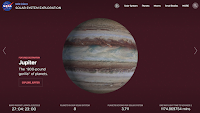
This week is a vacation week for the vast majority of readers of this blog. As I do at this time every year, I’m going to republish some of the most popular posts of 2018. Here’s one from April. I have been reviewing and sharing sharing resources from NASA for almost as long as this […]
Two Lessons on Cloud Types and Their Names

Meteorology is a science topic that affects all of us whether you like it or not. Look up at the clouds and you’re making a science observation. But what exactly are you looking at when you look at the clouds? And what kind of clouds are you seeing? Those questions are answered in a National […]
How Coffee Affects Your Brain

Like millions of people, I start my day by brewing coffee. On those rare days when I discover we’re out of coffee at home, it can totally throw my morning out of wack. Heck, I even pick hotel rooms based on whether or not they have in-room coffee makers. In other words, I’m addicted to […]
Science Friday – Audio Science Lessons
Science Friday is a weekly podcast (hosted on Sound Cloud) that features science stories spanning a wide array of topics, but most topics that are related to current news stories. As the name implies, new episodes appear on Fridays. You can listen to each episode in its entirety or you can choose to listen to […]
5 Observations Students Can Record With Google’s Science Journal App
Google’s Science Journal app provides some neat tools for recording data and writing observations. Within the app students create notebooks for recording experiment data and observations. Students can also use those notebooks to simply organize observations by topic. There are sensors built into the app for recording sound, speed, light, direction, and magnetism. Here are […]
How Your Digestive System Works – A TED-Ed Lesson
How Your Digestive System Works is a new TED-Ed lesson. Like all TED-Ed lessons the graphics in the video are great. The content itself is rather basic and best suited for a middle school science classroom. If you want to extend the lesson I would recommend taking a look at Sponge Lab Biology’s Interactive Build […]
SkyView – An Augmented Reality App to Help Students Find Constellations
SkyView is a free augmented reality app (an Android version and an iOS version is available) that helps students identify stars and constellations. With the free app installed students can point their phones at the sky and see constellations identified on their screens. In addition to constellations the app will identify planets, satellites, and some […]
One More Round-up of Solar Eclipse Resources
Throughout the last month I have shared some resources for teaching and learning about the solar eclipse that is passing over the United States this coming Monday. Here’s one last round-up of resources related to the solar eclipse. The Solar Eclipse Computer is a free tool from the Astronomical Applications Department of the U.S. Naval […]
A Handful of Lessons on the Water Cycle
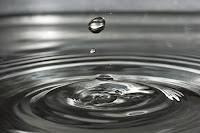
SciShow Kids is quickly becoming one of my favorite YouTube channels for educational videos for kids. The most recent video released on SciShow Kids is a concise explanation of the water cycle. The video, titled Where Does Water Come From?, explains how clouds are formed and why water is released from clouds. The video also […]
Ingredients – A New Series About the “Stuff Inside Your Stuff”

Ingredients is the title of a new National Geographic video series about the ingredients that go into creating common products like toothpaste, nail polish, and chewing gum. The videos feature George Zaidan examining and explaining the functions of the ingredients. After the explanation of the ingredients George attempts to create the product himself in a […]
Which Parts of the Brain Do What?

Which Parts of the Brain Do What? is the title of a new MinuteEarth video. In the short video students can learn a bit about the origins of brain studies, how FRMIs changed the way brain function is studied, and why correlation does not always equal causation. The video also introduces students to the terms […]
Wild Weather Kitchen Experiments
Wild Weather Kitchen Experiments is a short series of instructional videos produced by The Open University. Each of the four videos in the series features a short lesson followed by directions for an experiment that you can carry out to see the lesson’s concepts in action. The four lessons are on avalanches, tornadoes, floods, and […]
Fun and Short Smithsonian Videos
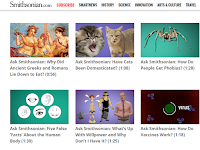
Ask Smithsonian is a fun video series featured on the Smithsonian Magazine website. All of the videos in the series are less than two minutes long. Each video tackles a fun topic in science. Some of the videos address questions that are less serious topics than others. For example, on the first page of Ask Smithsonian […]
The Sights, Sounds, and Science of Autumn
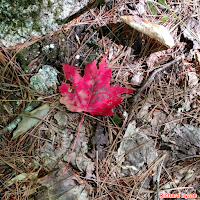
This morning I woke up to a chill in the air. As I walked my dogs I spotted a bunch of fallen, red leaves. In just over a week from now the autumnal equinox will be here in the northern hemisphere. Here are some resources for teaching and learning about the sights and sounds of […]
Stacked Ball Drop – A Physics Lesson
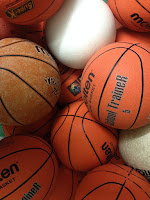
The Physics Girl is a great YouTube channel that recently appeared as a suggestion while I was browsing the ASAP Science channel. The Physics Girl is Dianna Cowern who produces short physics lessons for students of all ages. Stacked Ball Drop is one of the videos that caught my attention while I was browsing her […]
A Nice Set of Animated Science Lessons for Children
The Children’s University of Manchester has great collections of animated lessons covering seven science subjects for students of early elementary/ primary school age. The lessons cover The Body and Medicine, Energy and Environment, Earth and Beyond, Teeth and Eating, Micro-organisms, The Brain, and Exercise. For each science subject covered by The Children’s University of Manchester […]