
Through-Year Assessment
Updated September 2026
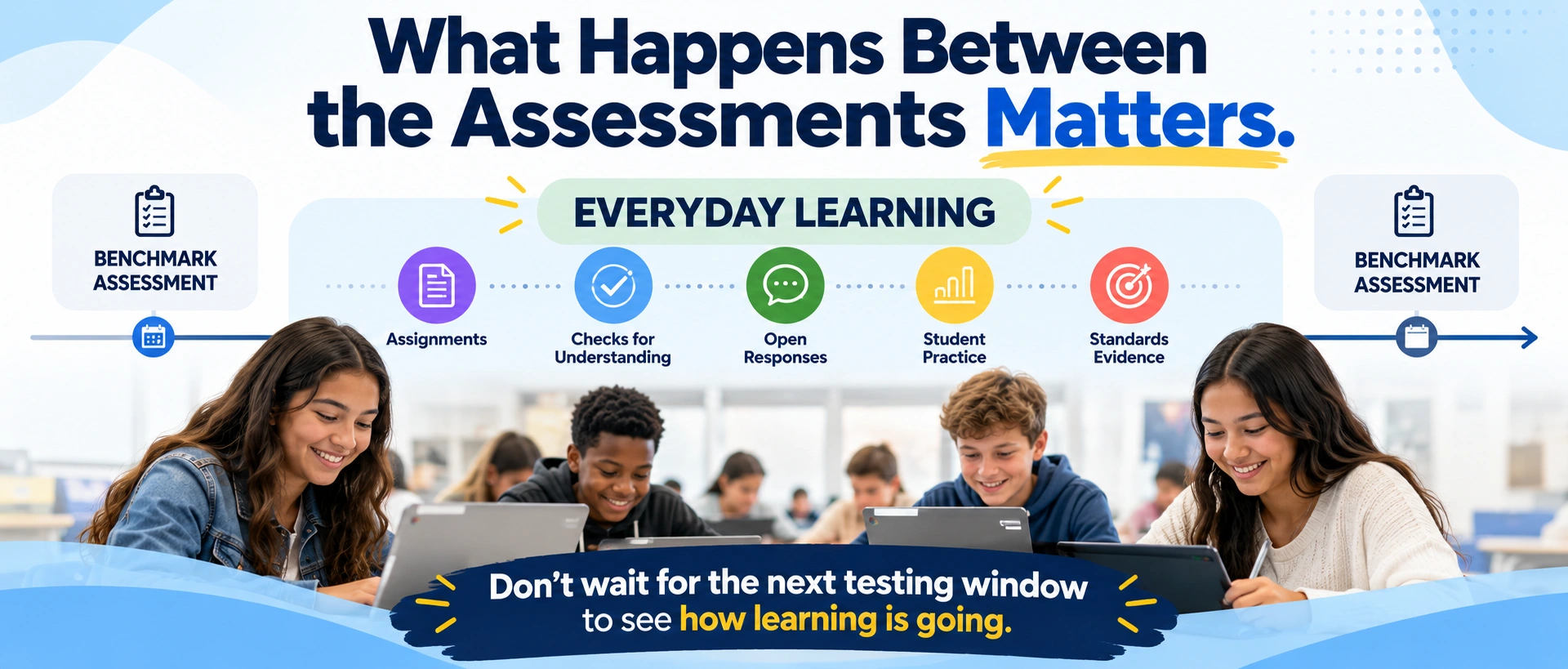
Education is entering a new era—one that moves beyond relying on a single end-of-year testing event toward a more continuous, instructionally supportive view of student learning.
Across the country, states are exploring and implementing new approaches that provide educators with information at multiple points during the school year. But even beginning-, middle-, and end-of-year assessments are still only checkpoints.
Students are learning—and showing what they understand—every day in between.
That makes the connection between formal assessment and everyday instruction increasingly important. Districts need ways to make the evidence students generate throughout the year visible and useful while there is still time to respond.
This nine-part Classwork.com series explores that changing landscape—from policy and research to classroom practice, technology, district leadership, and the growing role of AI.
Classwork helps connect those pieces by turning everyday classroom work into useful, standards-aligned instructional evidence—giving teachers, schools, and district leaders a more continuous view of student learning.
Through-Year Assessment Series
Explore the Series
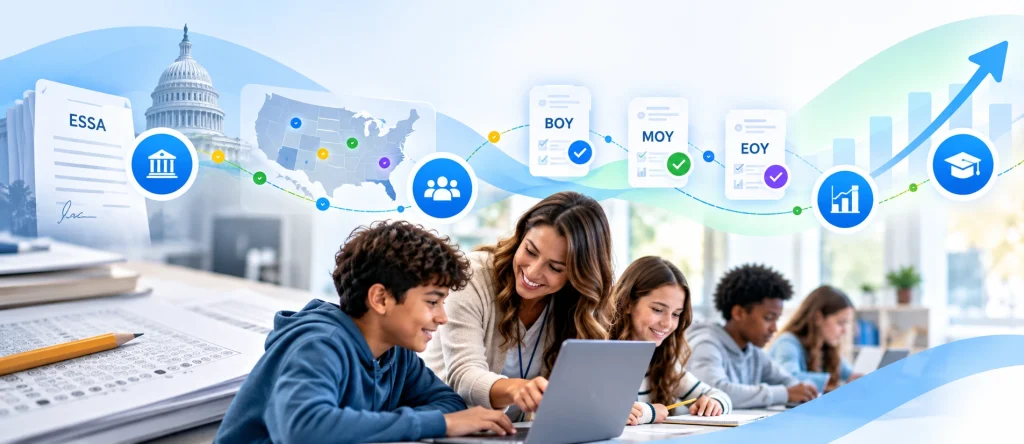
The History and Policy Foundations of Through-Year Assessment
Explores the origins of through-year assessment under ESSA and the U.S. Department of Education’s Innovative Assessment Demonstration Authority. Examines early state efforts and the broader shift toward assessment systems designed to provide more useful information throughout the school year.

A Primer on Florida FAST: What, When, Why, and How It’s Going
Explores Florida’s FAST system and its beginning-, middle-, and end-of-year progress-monitoring model. Looks at how one of the country’s established statewide approaches is changing when educators receive information about student learning.

Texas Assessment Reform: From TTAP to the Student Success Tool
Explores Texas’s changing assessment landscape—from the Through-year Assessment Pilot to HB 8 and the transition from STAAR to the Student Success Tool beginning in 2027–28. Examines what these changes mean for assessment, instruction, and the evidence districts use throughout the school year. Texas Education Agency
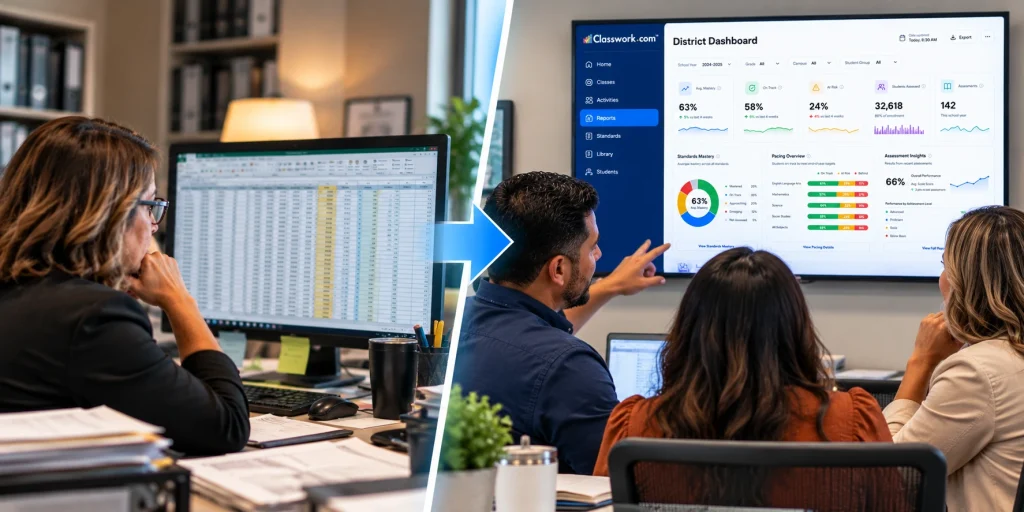
Why Legacy Assessment Management Systems Can’t Keep Up
Explores why assessment systems designed primarily for periodic testing and compliance can struggle to support the instructional decisions educators make every day. Looks at the growing need to connect assessment, classroom evidence, and timely instructional insight.
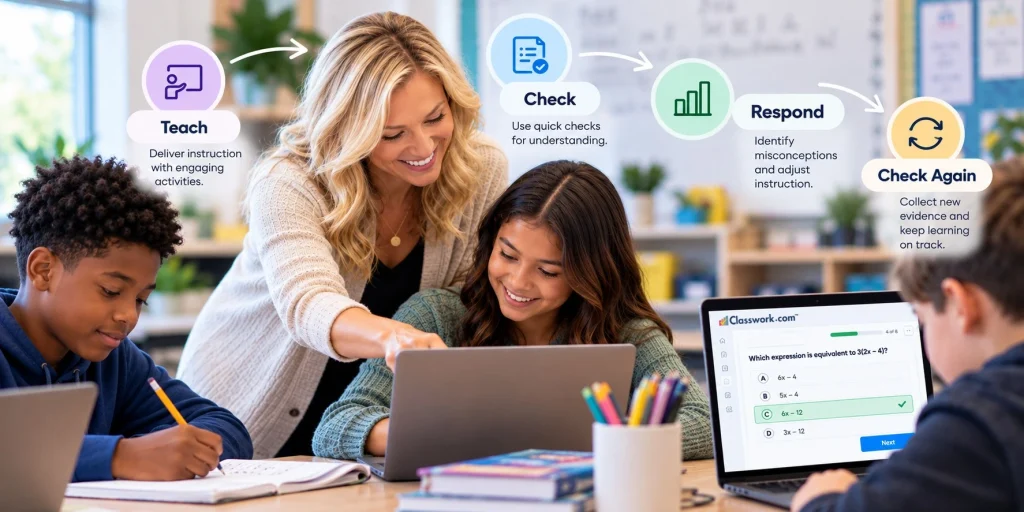
Instructionally Supportive Teaching Strategies for Through-Year Assessment
Connects through-year assessment with classroom practices such as timely feedback, reteaching, differentiation, and data-informed instruction. Explores how educators can use evidence throughout the learning process—not only after an assessment is complete.
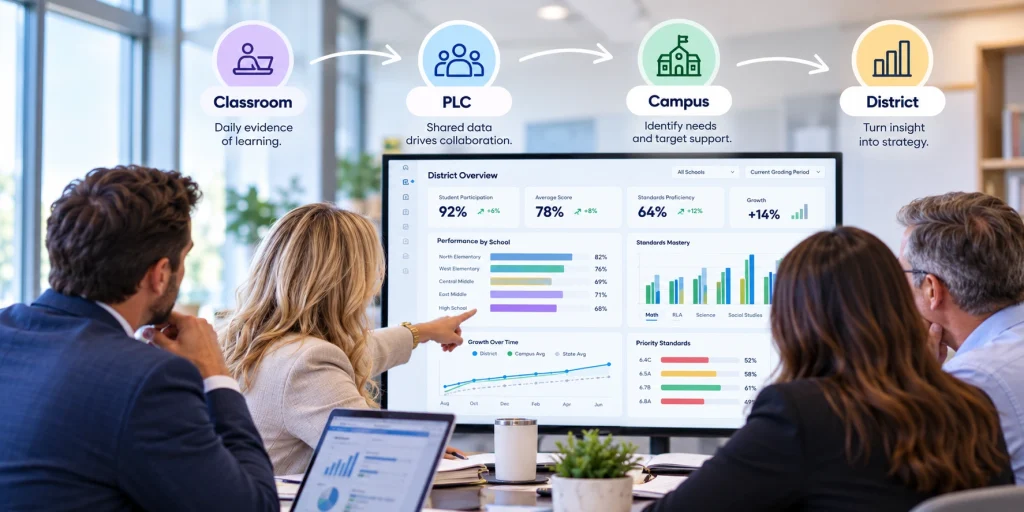
Building Instructionally Supportive Systems: From Daily Data to District Strategy
Explores how districts can connect assessment, everyday instructional evidence, curriculum, professional learning, and leadership into a more coherent system for supporting student learning.
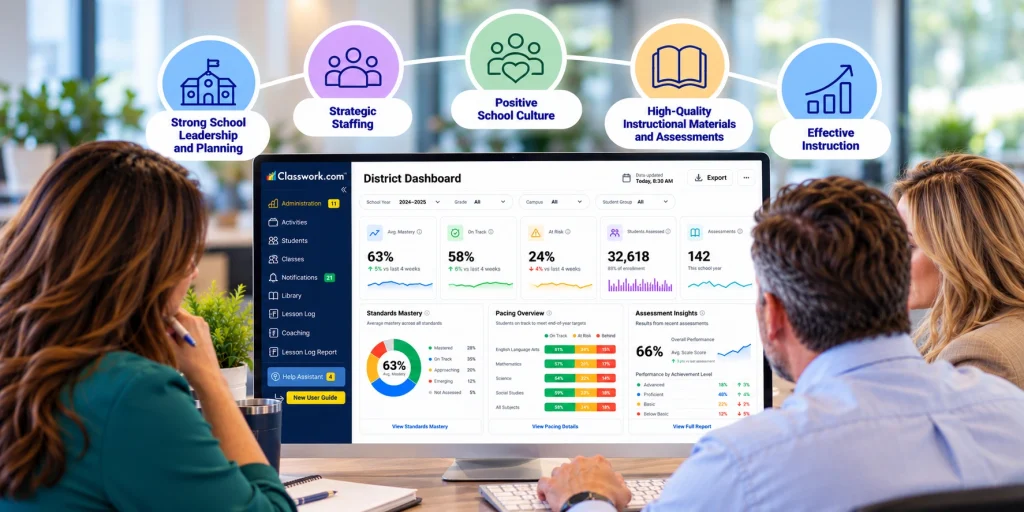
The Effective Schools Framework: A Roadmap for Instructionally Supportive Cultures
Uses Texas’s Effective Schools Framework to explore how leadership, effective instruction, high-quality instructional materials, teacher support, and school culture can work together to support continuous improvement.
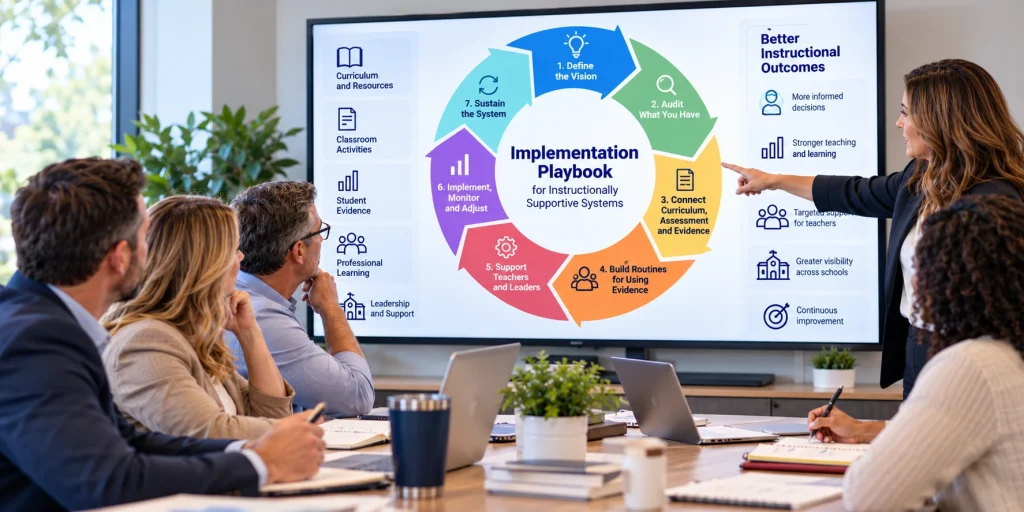
The Implementation Playbook for Instructionally Supportive Systems
A district-level roadmap for moving from vision to implementation—connecting student evidence, instructional change, professional learning, technology, and leadership into a sustainable system for continuous improvement.

The Future of Through-Year Assessment: Research, AI, and Real-Time Learning Data
Explores where through-year assessment is headed and how AI, everyday classroom evidence, and districtwide instructional visibility can help create a more continuous picture of student learning.
Ready to See the Bigger Picture of Student Learning?
Through-year assessment provides important checkpoints. Classwork helps districts see more of what happens in between—connecting curriculum, classroom work, student evidence, and reporting in one instructional system.